

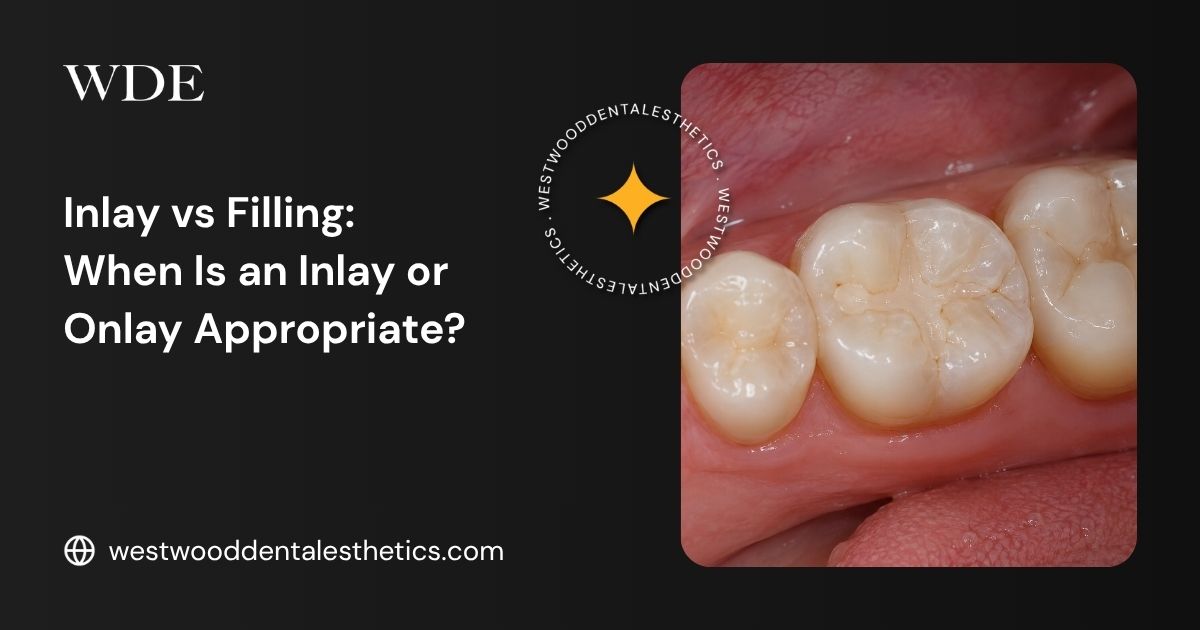
The choice between a filling, inlay, onlay, or crown depends less on a cavity’s size alone than on where the damage is located and how much healthy tooth structure remains. A filling can often restore a tooth when sufficient structure remains, while an inlay or onlay may be considered when broader support or coverage of part of the chewing surface is needed. More extensive structural loss may call for a crown.
Being told that you need “more than a filling” can understandably raise questions, especially if you expected a simpler restoration. The important question is not whether a cavity has crossed a universal size threshold, but what the remaining tooth can reliably support.
At Westwood Dental Esthetics, Dr. Kaivan Kiai, DDS evaluates the extent and location of damage, remaining tooth structure, cusp condition, bite forces, and other clinical findings before recommending a restorative option. This article explains how fillings, inlays, onlays, and crowns differ and why one may be recommended over another.
Here is the Quick Answer:
The choice between a filling, inlay, onlay, or crown depends on the amount and condition of the remaining tooth structure together with other clinical findings, not cavity size alone. Treatment recommendations are based on the needs of the individual tooth rather than a universal rule.
Inlays and onlays are indirect restorations that may be appropriate when additional support for the chewing surface is needed while preserving as much healthy tooth structure as possible. Many cavities are appropriately restored with direct fillings, and the most suitable restoration depends on the overall clinical situation.
Filling, Inlay, Onlay, or Crown? The Restorative Spectrum at a Glance
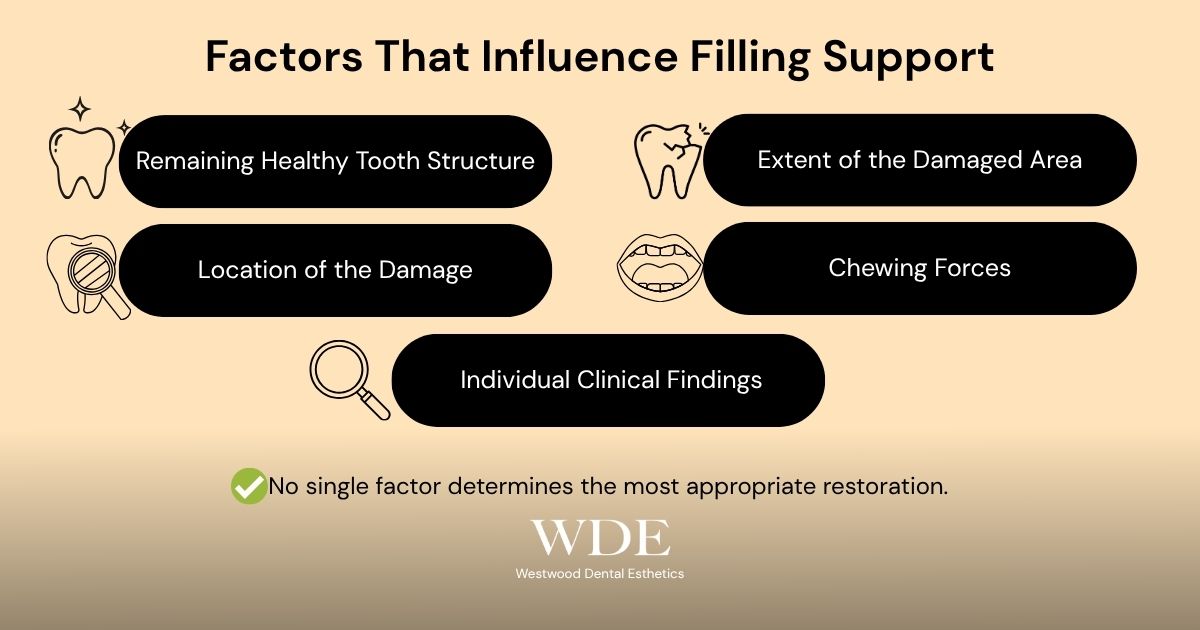
Restorative treatments exist along a spectrum rather than as completely separate solutions. The most appropriate restoration generally depends on how much healthy tooth structure remains, where the damage is located, and the overall clinical findings.
Comparison of Fillings, Inlays, Onlays, and Crowns | ||
|---|---|---|
| Restoration | What It Generally Restores | Common Clinical Situations |
| Filling | Restores a Localized Area within a Tooth | Small to Moderate Defects with Sufficient Remaining Tooth Structure |
| Inlay | Fits within the Chewing Surface without Covering the Cusps | Damage Confined within the Cusps, Depending on Clinical Findings |
| Onlay | Restores Part of the Chewing Surface and May Cover One or More Cusps | Larger Defects That May Require Coverage of One or More Cusps |
| Crown | Covers the Prepared Visible Portion of the Tooth | Extensive Structural Loss or Situations Where More Complete Coverage May Be Appropriate |
What a Traditional Filling Can (and Can’t) Support
A direct filling can restore many teeth successfully, but its suitability depends on more than the size of the cavity. The remaining tooth structure plays an important role in supporting the restoration during everyday function, making structural preservation an important consideration alongside the extent of decay or damage.
How a Filling Works Structurally
A direct filling is placed into a prepared area of the tooth to replace tissue that has been removed because of decay or damage. Once bonded in place, the restoration relies on the surrounding tooth structure to help restore the tooth’s shape and function.
Because a dental filling relies on the surrounding tooth for support, the amount and condition of the remaining enamel and dentin are important considerations. Bonding contributes to the restoration’s stability, but performance also depends on factors such as the size and location of the restoration, functional demands, and individual clinical findings.
Why Cusp Involvement Matters
Cusps are the raised portions of back teeth that help bear chewing forces. When decay, fracture, or an existing restoration weakens a cusp, the dentist must consider whether the remaining tooth can adequately support a direct filling or whether some form of cusp coverage would provide a more suitable restoration.
Cusp involvement does not automatically mean that an onlay or crown is required. The decision also depends on how much healthy tooth remains, the location and pattern of damage, the bite, existing restorations, and other clinical findings. When cusp coverage is appropriate but the tooth does not require a full crown, an onlay can restore the affected portion while preserving structure elsewhere.
Why “It’s a Bigger Cavity” Isn’t the Full Picture
The size of a cavity does not, by itself, determine which restoration may be appropriate. Two cavities that appear similar can present very different structural challenges depending on where they are located and how much healthy tooth structure remains.
Other considerations may include existing restorations, the condition of the surrounding tooth, functional demands during chewing, and additional clinical findings. Looking at these factors together provides a more complete understanding of which restorative approach may be most appropriate for the individual tooth while preserving healthy tooth structure whenever clinically appropriate.
If you have been told that a tooth needs more than a filling, it is reasonable to ask what changed the recommendation. Your dentist should be able to explain which parts of the tooth are damaged or weakened, whether any cusps need additional support, and why the proposed restoration is preferred over a filling or a crown. A recommendation for an inlay or onlay should be based on the condition of the tooth—not simply on the fact that it is a more involved restoration.
What Inlays and Onlays Actually Are
Inlays and onlays are indirect restorations that occupy the space between direct fillings and full-coverage crowns. They are designed to replace missing tooth structure in situations where an indirect restoration is considered appropriate based on individual clinical findings.
Made Outside the Mouth, Bonded as One Piece
Unlike a direct filling, an inlay or onlay is fabricated outside the mouth before it is bonded to the prepared tooth. It is designed to fit the prepared area of the tooth before being bonded into place.
Because the restoration is completed before placement, it restores missing tooth structure differently from a direct filling that is shaped directly inside the tooth. In appropriate situations, this approach may help support the remaining tooth structure during normal function, although outcomes depend on the individual clinical situation and the condition of the remaining tooth structure.
Inlay vs. Onlay: What Determines Which One
An inlay fits within the cusps of a tooth and restores the prepared area between them without extending over the cusp tips. An onlay extends to cover one or more cusps when additional coverage of the chewing surface may be appropriate.
The choice between an inlay and an onlay is not based on a single feature alone. The amount and condition of the remaining tooth structure, the extent and location of the damaged area, and other clinical findings are considered together. Cusp coverage may be appropriate when additional structural support is needed, but no individual finding automatically determines the type of restoration.
Materials and Durability
Ceramic and composite resin are among the materials commonly used for inlays and onlays. The selection of a material depends on the individual clinical situation and the characteristics of the tooth being restored. Ceramic is often chosen for its natural appearance and favorable wear characteristics, while composite resin may also be appropriate in selected circumstances.
Many inlays and onlays function well for years with appropriate care, but longevity varies from one patient to another. Longevity depends on factors such as oral hygiene, functional demands, restoration size, the condition of the remaining tooth structure, and individual clinical circumstances.
Ceramic vs. Composite Resin for Inlays and Onlays | |
|---|---|
| Ceramic | Composite Resin |
| Natural Tooth-Like Appearance | Tooth-Colored Restoration |
| Favorable Wear Characteristics | May Be Appropriate in Selected Situations |
| Commonly Used for Indirect Restorations | Material Selection Depends on Clinical Needs |
Is an inlay/onlay worth the extra cost?
An inlay or onlay may cost more than a direct filling because it is a custom indirect restoration. Instead of placing and shaping the restorative material directly in the prepared tooth, the dentist prepares the tooth and creates records used to produce a restoration that is then checked for fit and bite before final placement. Material, fabrication method, and treatment complexity can all affect cost.
Whether that additional treatment is worthwhile depends on the tooth. If enough healthy structure remains for a direct filling to provide an appropriate restoration, a filling may be the simpler and more economical choice. When the tooth would benefit from broader support or selective cusp coverage without requiring a full crown, an inlay or onlay may offer a more conservative way to address that structural need.
Cost alone should not determine the restoration. The goal is to choose the least extensive treatment that can appropriately restore the tooth based on its current condition.
How Dr. Kiai Determines What Your Tooth Actually Needs
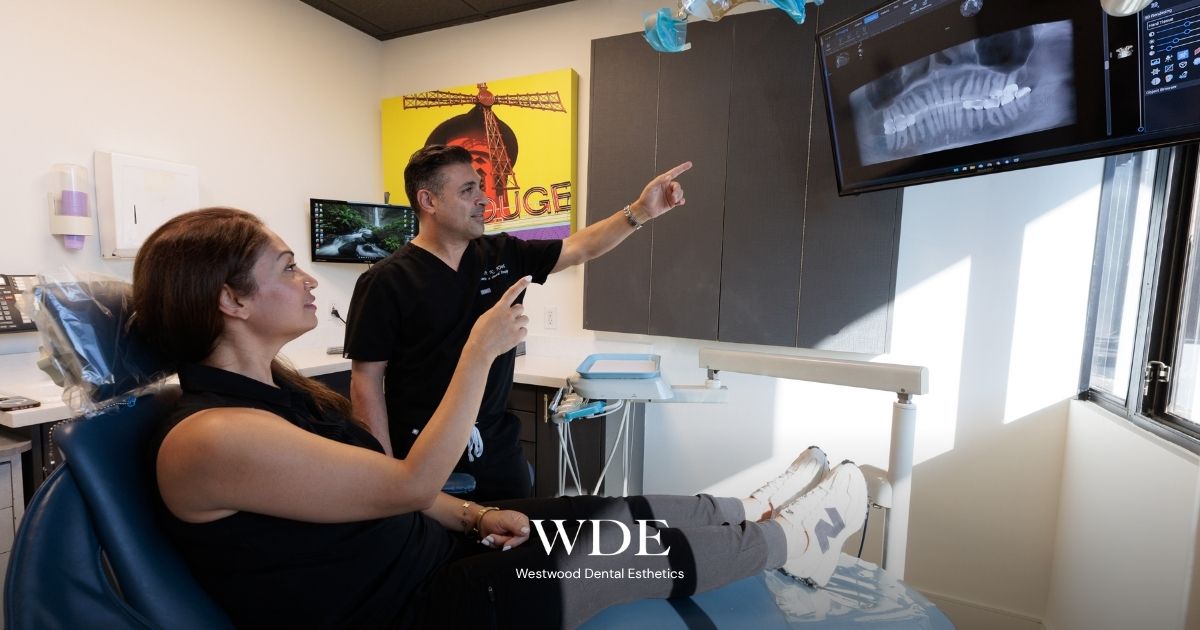
There is no universal cavity measurement that determines whether a tooth needs a filling, inlay, onlay, or crown. Dr. Kiai evaluates the extent and location of the damage, the amount of healthy tooth structure remaining, cusp condition, existing restorations, bite forces, and diagnostic imaging when relevant before recommending an approach.
If you have been told that you need more than a filling and would like to understand your options, learn more about inlays and onlays or schedule a restorative consultation with Dr. Kaivan Kiai, DDS at Westwood Dental Esthetics.
Our office is located at 1964 Westwood Blvd. Suite 250, Los Angeles, CA 90025.