

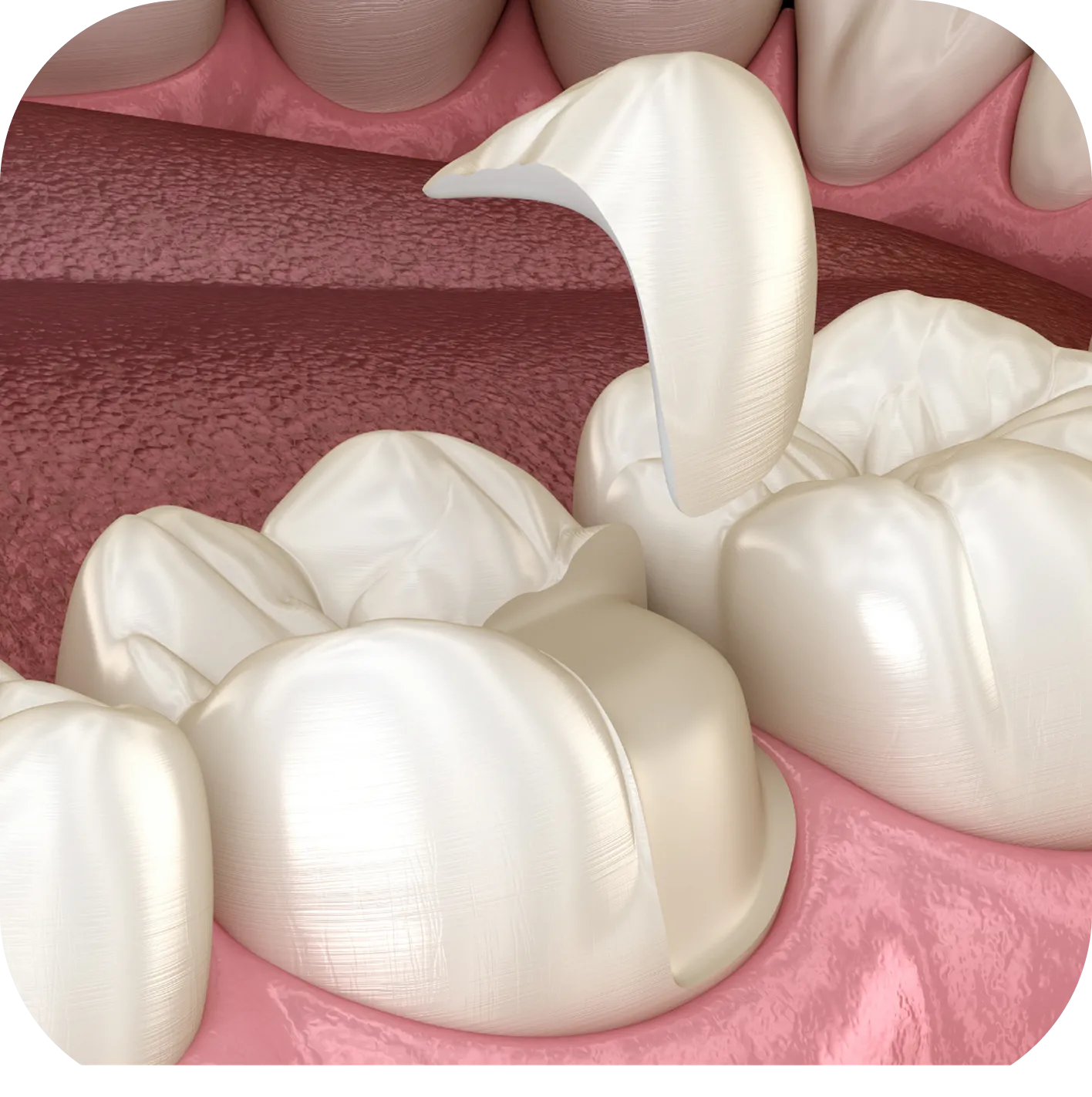
What Inlays and Onlays Do
Inlays and onlays are custom restorations used to repair teeth with moderate damage. An inlay fits within the grooves of the tooth, while an onlay covers one or more raised chewing surfaces, also called cusps.
These restorations help rebuild damaged areas while preserving more natural tooth structure than a full crown in appropriate cases. The goal is to restore strength, comfort, and function while maintaining a natural-looking appearance.
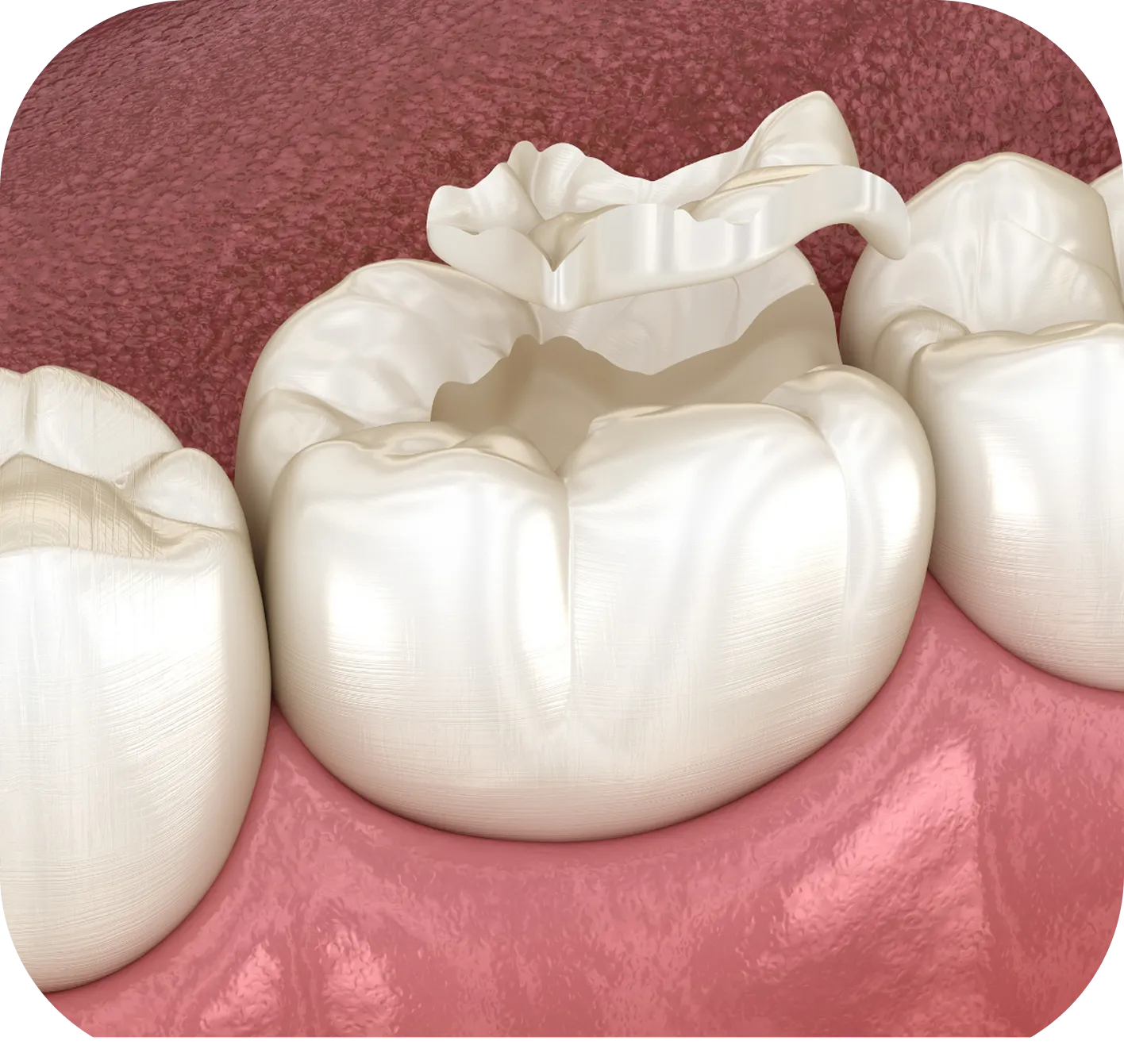
When an Inlay or Onlay May Be Recommended
The suitability of an inlay or onlay depends on the size and location of the damaged area, the remaining tooth structure, and the forces placed on the tooth during biting and chewing. Teeth with more extensive weakness may need a crown for broader protection.

The Inlay / Onlay Process
At Westwood Dental Esthetics, the inlay or onlay process begins with an evaluation to review the damaged tooth, assess the bite, and determine which restoration may be appropriate. Digital imaging, impressions, or other records may be used to design a restoration that fits the tooth accurately.
If an inlay or onlay is recommended, the damaged area is cleaned and prepared, and a custom restoration is created to fit the tooth. Once ready, the restoration is checked for fit, adjusted for bite comfort, and bonded securely in place.
Choosing Between a Filling, Inlay, Onlay, or Crown
Inlays and onlays are often considered when a tooth needs more support than a standard filling but does not require full crown coverage. The right restoration depends on how much tooth structure remains, how the damaged area affects the chewing surface, and how much force the tooth receives during daily function.
A consultation at Westwood Dental Esthetics can help determine whether an inlay, onlay, filling, crown, or another restorative option may better fit your needs. Recommendations are based on the amount of healthy tooth structure remaining, tooth location, bite forces, appearance goals, and long-term treatment priorities.

Benefits of Inlays and Onlays
Inlays and onlays do more than repair damaged tooth structure. They can help support strength, function, and natural-looking results while preserving healthy enamel when appropriate. Some potential benefits include:
Restore Moderate Tooth Damage
Inlays and onlays help repair teeth with damage that may be too large for a standard filling. They rebuild the affected area and support more comfortable chewing.
Preserve Healthy Tooth Structure
In appropriate cases, inlays and onlays can restore damaged areas without covering the entire tooth. This helps preserve more natural structure compared with broader restorations.
Support Chewing Strength
Custom inlays and onlays are designed to fit securely within the bite. Proper placement can help restore stability and comfort during everyday chewing.
Natural-Looking Appearance
Inlays and onlays can be designed to blend with the surrounding tooth in shape and color. This helps maintain a natural-looking smile while restoring function.
Custom Fit for Daily Use
Each restoration is made to fit the prepared tooth and bite pattern. Careful design and adjustment help improve comfort, stability, and usability throughout the day.
Long-Term Restorative Support
With proper care and regular dental visits, inlays and onlays may provide durable support for selected teeth. Monitoring helps ensure the restoration and surrounding tooth remain healthy over time.