

Most cracked or chipped teeth are not life-threatening emergencies, but they should be evaluated promptly by a dentist. If it happens at night, first check for uncontrolled bleeding, rapidly increasing facial swelling, trouble breathing or swallowing, or serious facial trauma. If none of these are present, you can usually protect the tooth overnight and arrange prompt dental care when the office opens.
Dr. Kaivan Kiai, DDS and the team at Westwood Dental Esthetics created this guide to explain what to do immediately, how to manage discomfort safely, and when a hospital emergency department is appropriate.
Here is the Quick Answer:
Most chipped or cracked teeth that occur at night can usually wait for prompt dental evaluation, provided there is no uncontrolled bleeding, severe swelling affecting breathing or swallowing, or serious facial trauma.
Until you can be seen, protect the tooth with simple first-aid measures, avoid further stress on the area, and manage discomfort safely. Because the severity of a crack cannot be determined at home, professional evaluation is needed to decide whether treatment is required and which option is most appropriate.
First: Is this an ER situation?
The first step after a nighttime tooth injury is deciding whether you need emergency medical care or prompt dental care. While many chipped or cracked teeth require timely evaluation by a dentist, certain symptoms suggest a more serious injury that should be assessed immediately in a hospital emergency setting.
Seek emergency medical care immediately if you have:
- Heavy bleeding that does not stop despite gentle, direct pressure.
- Severe or rapidly increasing swelling involving the face, mouth, throat, neck, or eye area, especially if it makes breathing or swallowing difficult.
- Serious facial or jaw trauma, particularly if you suspect a broken jaw or another significant facial injury.
- Loss of consciousness or another significant medical injury associated with the accident.
- Fever together with significant facial swelling or other signs of a spreading infection or serious systemic illness.
When these emergency features are not present, an isolated damaged tooth will usually require prompt dental care rather than hospital emergency treatment. Because the appearance of the tooth or the level of discomfort cannot determine the full extent of the injury, the next section explains the immediate first-aid steps that may help protect the tooth until it can be evaluated by a dentist
Step-by-Step: What to Do Right Now
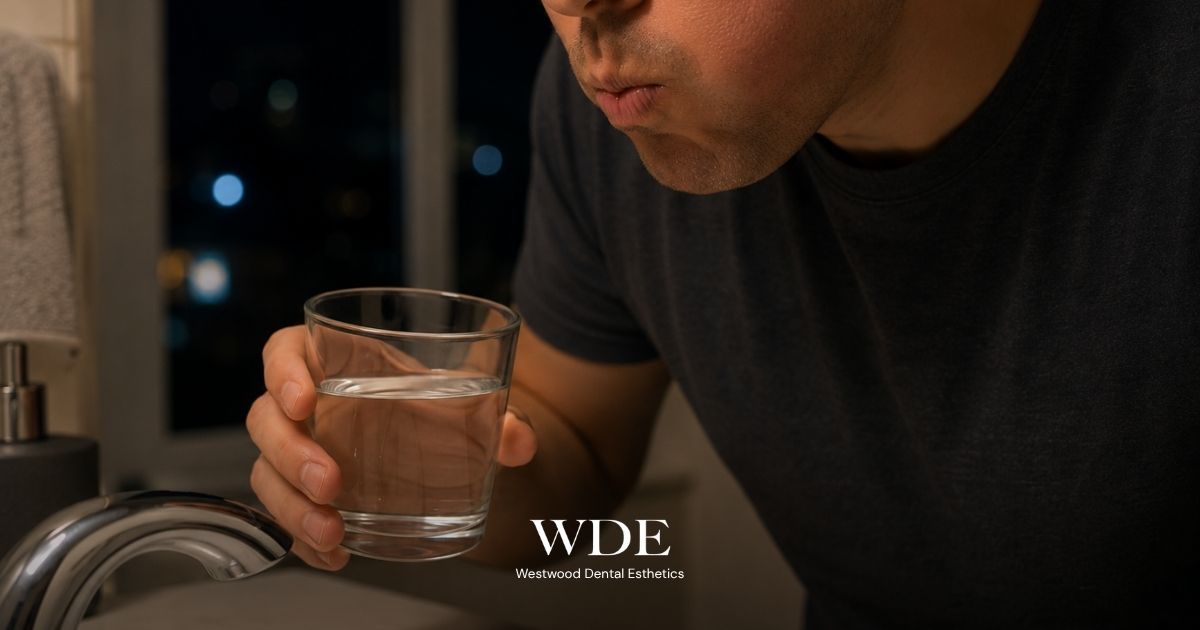
If you discover a damaged tooth after dental offices have closed, focus on simple first-aid measures that may help protect the area until you can receive professional dental care.
These measures are intended only to help protect the tooth until it can be evaluated by a dentist.
Step 1: Rinse Gently with Warm Water
Gently rinse your mouth with warm water to help remove blood, food particles, or other debris around the damaged area. Avoid vigorous swishing or repeatedly rinsing the mouth, as unnecessary agitation may further irritate injured tissues. A gentle rinse is simply a temporary first-aid measure to keep the area as clean as reasonably possible until it can be professionally evaluated.
Step 2: Locate and Preserve Any Broken Fragment
If part of the tooth has broken off, try to locate it if this can be done safely. Handle the fragment carefully and place it in a clean container with milk or your own saliva, then bring it to your dental appointment. In some situations, having the fragment available may help the dentist assess the injury and plan treatment, although it cannot be assumed that the piece can be reused. Do not scrub the fragment, disinfect it with household products, apply glue, force it back into place, or store it loose inside your mouth.
Step 3: Apply a Cold Compress
If the surrounding area begins to swell or feels tender, an external cold compress placed against the outside of the cheek may provide temporary comfort and may help limit swelling. Apply the compress intermittently rather than continuously, keeping it on the outside of the face rather than directly against the tooth. This measure is intended only for short-term symptom management until dental care is available.
Step 4: Control Minor Bleeding
If there is minor bleeding from an injured gum or other nearby soft tissue, gently apply direct pressure with clean gauze until the bleeding slows or stops. This guidance applies only to minor soft-tissue bleeding. As explained in the previous section, bleeding that is heavy or does not stop despite gentle pressure requires prompt medical or dental assessment rather than continued home first aid.
Step 5: Avoid Chewing on the Affected Side
Until the tooth has been evaluated, avoid chewing on the affected side to reduce additional stress on the damaged area. If certain foods or drinks increase sensitivity or discomfort, choose softer foods and avoid very hard, crunchy, sticky, or extremely hot or cold items until a dentist can examine the tooth. These temporary precautions may help protect the tooth, but they do not replace a professional evaluation.
Managing Pain Until You Can Be Seen
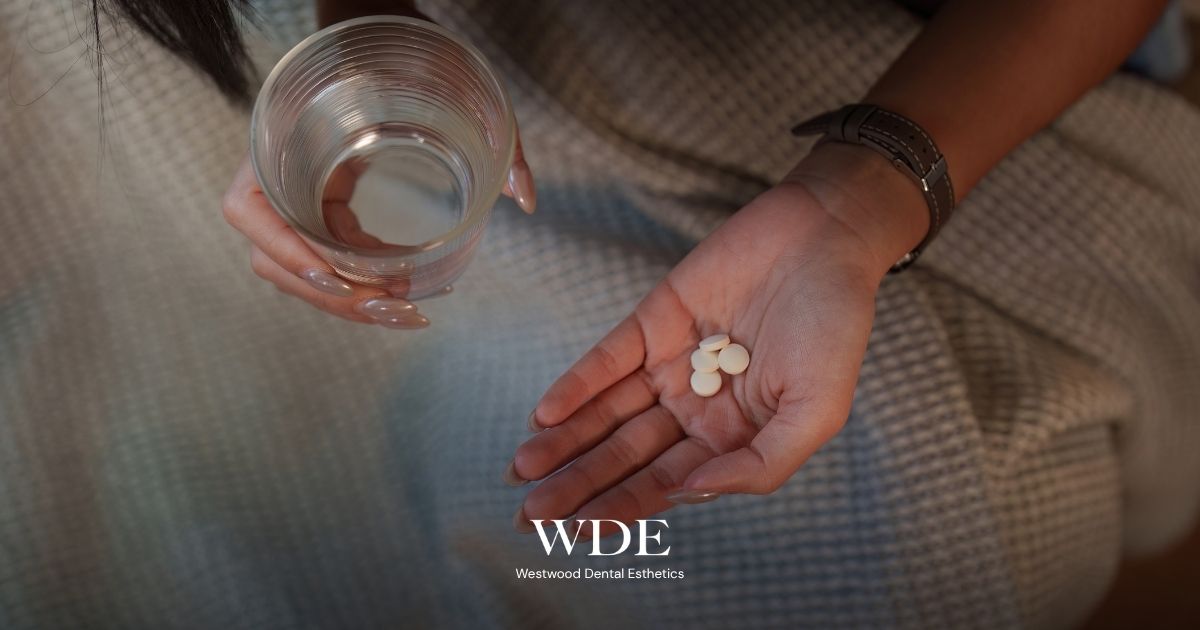
A damaged tooth can become uncomfortable in the hours before you are able to see a dentist. While these temporary measures cannot repair the tooth, they may help make the wait more comfortable until professional dental care is available.
OTC Pain Relief
For temporary dental pain, over-the-counter options such as ibuprofen or acetaminophen may help when they are safe for you and used according to the product label. Some people should avoid NSAIDs such as ibuprofen because of medical conditions, medications, pregnancy, allergies, or other health factors, so follow your usual medical guidance or ask a pharmacist if you are unsure.
Never place aspirin or any other medication directly against the tooth or gum tissue, because direct contact can irritate or damage the soft tissues.
Tooth Sensitivity After a Crack
After a tooth is damaged, it is common to notice sensitivity to cold or hot foods and drinks, sweet foods, or even cool air. This can happen because the injury leaves underlying tooth structures less protected than before. The amount of sensitivity does not necessarily reflect how severe the injury is, so even a damaged tooth that feels only mildly sensitive should still be evaluated by a dentist.
Sleeping More Comfortably Overnight
If discomfort becomes more noticeable while lying down, some people find it more comfortable to sleep with the head slightly elevated. This simple adjustment may help reduce the sensation of throbbing or pressure for some people while resting. It should be viewed as an optional comfort measure rather than a treatment for the damaged tooth, and the tooth should still be checked by a dentist, even if symptoms improve.
Protecting the Tooth Overnight
Until you can see a dentist, the goal is to reduce additional irritation and protect the damaged tooth from further stress. These measures are temporary and are not a substitute for professional dental care.
Protecting Sharp Edges
If a rough or sharp edge is rubbing against your tongue, lips, or cheek:
- Cover the edge with temporary dental wax available at many pharmacies.
- Apply only enough wax to cushion the sharp area.
- Replace the wax if it becomes loose or falls off.
Dental wax helps protect nearby soft tissues but does not repair or stabilize the damaged tooth.
Overnight Protection Checklist
Until your appointment:
- Choose softer foods if you need to eat.
- Chew on the opposite side whenever possible.
- Avoid hard, crunchy, or sticky foods.
- Skip very hot or very cold foods and drinks if they increase sensitivity.
- Avoid touching or testing the damaged tooth with your fingers or tongue.
If your tooth remains painful, feels unstable, or you’re unsure how serious the damage may be, our emergency dentistry page explains when to seek urgent dental care and how to request an emergency appointment with Dr. Kaivan Kiai and the Westwood Dental Esthetics team.
What Happens at Your Appointment
At your appointment, the first goal is to determine how much of the tooth has been affected and what type of care, if any, is appropriate. The examination, together with any imaging or other information needed, helps determine the appropriate next step.
Evaluating the Tooth and Surrounding Area
The dentist may examine the damaged tooth together with the surrounding gums and soft tissues, ask about your symptoms, and discuss how the injury occurred. Depending on the situation, they may also evaluate your bite, tooth mobility, and other signs of damage. Because the visible appearance of a damaged tooth does not always reflect the full extent of the injury, treatment decisions are based on the full condition of the tooth, not appearance alone.
When Imaging May Be Needed
Imaging may be used when clinically appropriate to provide additional information about the tooth, its root, the supporting bone, or nearby structures. Although imaging can be an important part of evaluation in some situations, it is not required for every damaged tooth, and not every crack or fracture can be identified on imaging alone. Whether imaging is needed depends on the type and extent of the injury.
Treatment Depends on the Extent of the Damage
Treatment recommendations depend on the location and extent of the damage, the condition of the remaining tooth structure, whether the inner tooth appears to be affected, and the overall condition of the tooth.
Depending on the extent of the damage, treatment may range from smoothing a rough area or placing a direct restoration to an inlay or onlay, a dental crown, treatment involving the dental pulp, or extraction when the tooth cannot reasonably be restored. The appropriate treatment can only be determined after a clinical evaluation.
Contacting Westwood Dental Esthetics for a Dental Emergency
The home measures described in this guide are intended only as temporary first aid to help protect a damaged tooth until a dentist can examine it. Even if the area feels better, a dental examination remains important because the full extent of an injury cannot be determined at home.
If you’ve chipped or cracked a tooth, Dr. Kaivan Kiai, DDS, and the team at Westwood Dental Esthetics can examine the damaged tooth and discuss the most appropriate next steps. Patients seeking prompt care can request an appointment through our emergency dental care page.
To request an appointment after a chipped or cracked tooth, call Westwood Dental Esthetics or book online. Our office is located at 1964 Westwood Blvd. Suite 250, Los Angeles, CA 90025. Prompt professional evaluation can help determine the extent of the injury and guide treatment recommendations based on the condition of the tooth.