

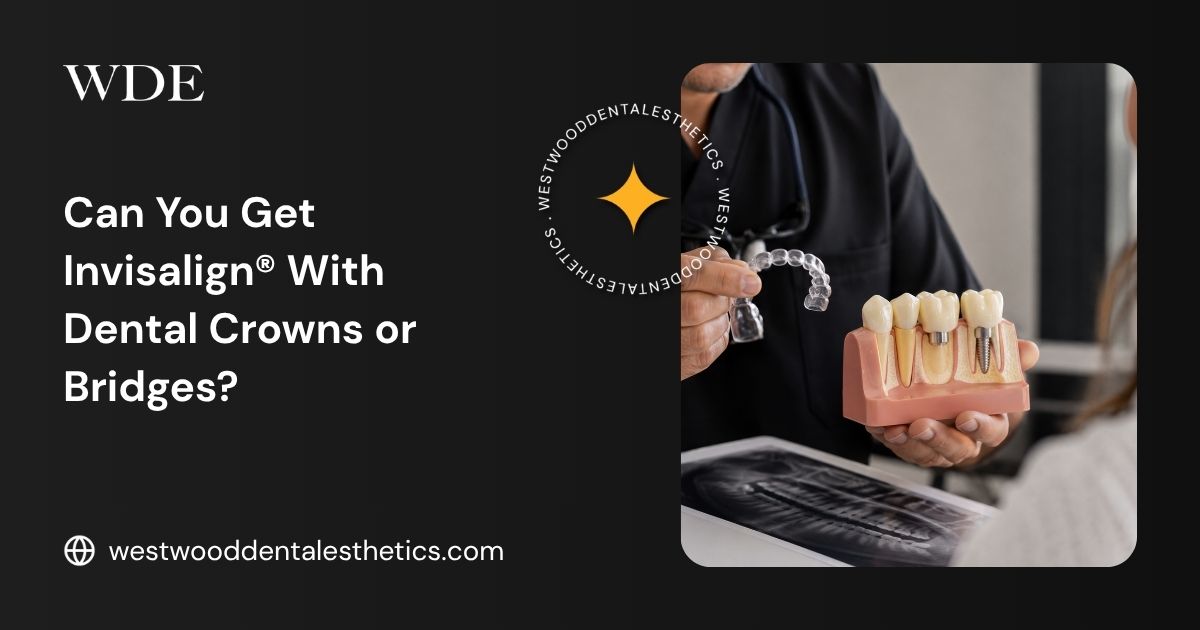
Most patients with one or more crowns on natural teeth can still be considered for Invisalign® treatment. A crowned tooth can usually move because its natural root and supporting tissues remain capable of responding to orthodontic force. Fixed dental bridges are more complicated because they connect multiple units, limiting the independent tooth movement on which clear-aligner treatment relies.
Implant-supported crowns present a different limitation: the implant is integrated with the jawbone and remains fixed rather than moving orthodontically. However, surrounding natural teeth may still be repositioned in suitable cases.
The relevant question is therefore not simply whether you have existing dental work, but what type of restoration you have, where it is located and which teeth need to move. Dr. Kaivan Kiai, DDS, and the team at Westwood Dental Esthetics assess these factors individually when evaluating Invisalign® candidacy for patients in Westwood and West Los Angeles.
Here is the Quick Answer:
Most patients with crowns on natural teeth may still be candidates for Invisalign®. Conventional fixed bridges require more careful planning because their connected units cannot move independently, while implant-supported crowns remain fixed in the jawbone. Candidacy ultimately depends on the restoration type, its location, its condition and the tooth movements required.
Invisalign® Candidacy by Restoration Type, at a Glance
Having existing dental work does not automatically determine Invisalign® candidacy. The type of restoration and the overall clinical situation both influence candidacy, so similar-looking cases may receive different recommendations.
| Restoration Type | Typical Invisalign® Compatibility | Why |
| Single Crown on a Natural Tooth | Generally Compatible | The natural root and supporting tissues can usually respond to orthodontic force. |
| Multiple Separate Crowns | Often Compatible | Each crowned natural tooth may still move independently when the restorations are not connected. |
| Implant-Supported Crown | Compatible Only as a Fixed Element | The implant itself cannot be repositioned, although surrounding natural teeth may still move. |
| Conventional Fixed Bridge | More Complex | The connected units restrict independent movement of the supporting teeth. |
| Veneer | Often Compatible with Careful Planning | The natural tooth can move, but veneer condition, margins, aesthetics and attachment bonding require assessment. |
These are general patterns rather than individual candidacy decisions. Restoration condition, material and location, bite relationships and the specific movements required all affect the final treatment plan.
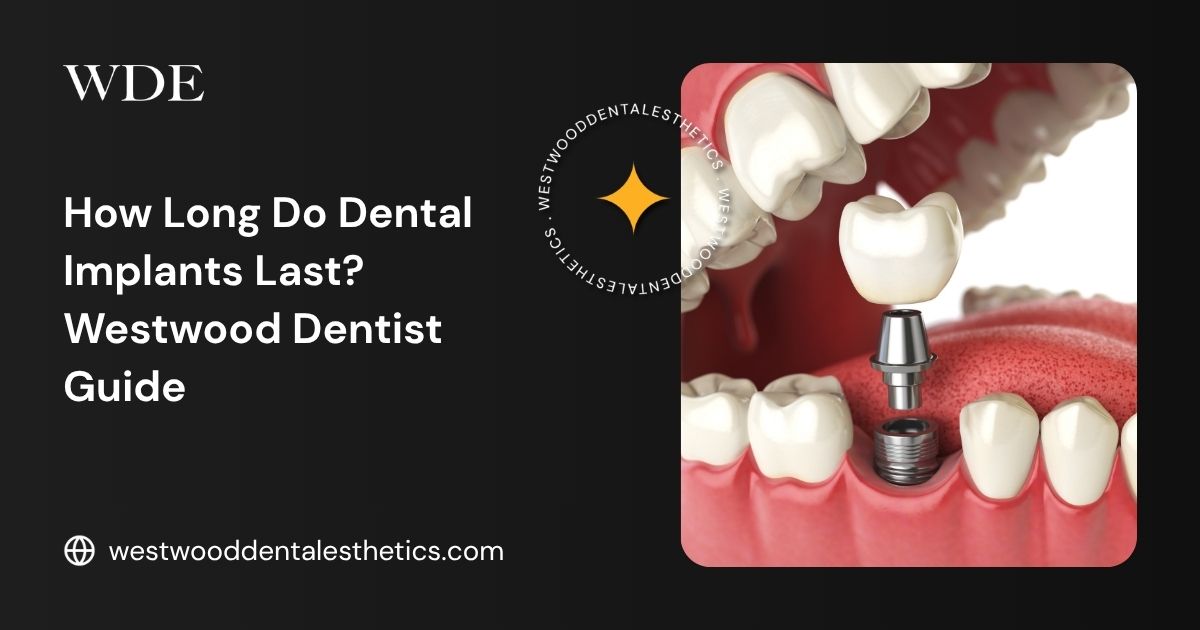
Why Single and Multiple Crowns Usually Aren’t a Problem
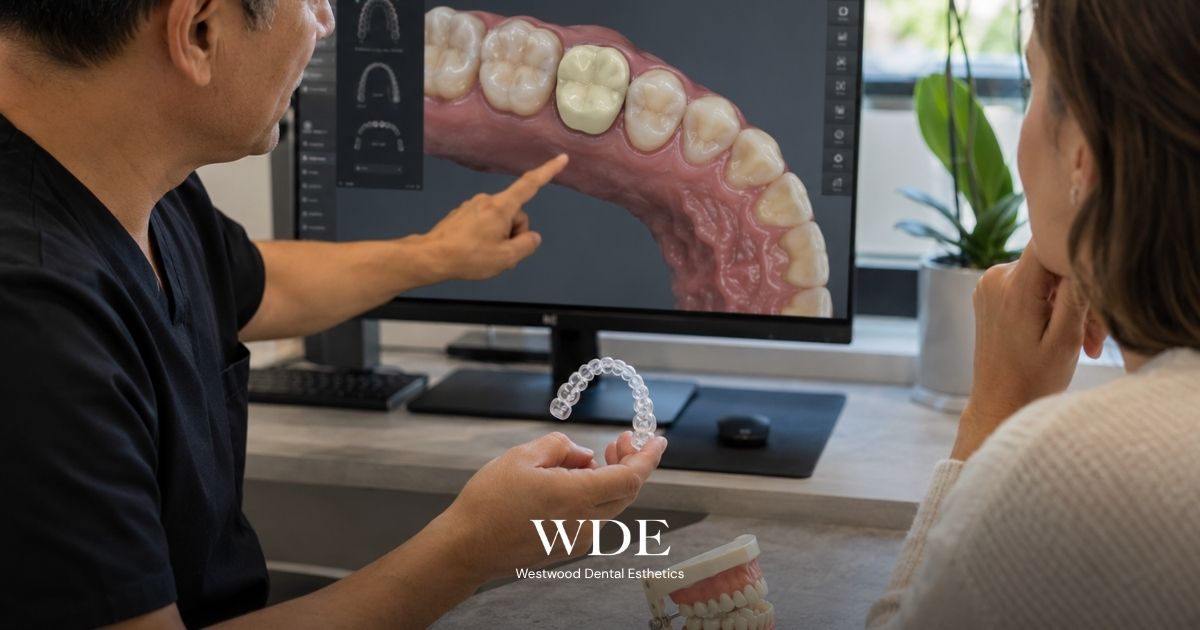
Many people assume that having one or more dental crowns automatically rules out Invisalign®. In reality, a crown does not necessarily prevent orthodontic treatment. Whether Invisalign® may be appropriate depends on the condition of the restored tooth, the desired tooth movements, and other individual clinical findings rather than the presence of a crown alone.
How a Crowned Tooth Moves
A dental crown covers the prepared visible portion of a natural tooth. Although the restoration changes the tooth’s outer surface, the natural root and the tissues supporting it remain beneath the crown.
When the tooth and its supporting tissues are healthy, orthodontic force can move the crowned tooth as a complete unit. The crown does not move separately from the tooth beneath it, so its presence alone does not usually prevent Invisalign® treatment. Its condition, material, position and the movement required must still be considered during treatment planning.
Attachments on Crowns
Invisalign® attachments are small tooth-colored shapes that help aligners grip selected teeth and apply particular forces. They can often be bonded to a crown, but bonding to restorative material is different from bonding to natural enamel.
Suitability depends partly on whether the crown is made from zirconia, porcelain, lithium disilicate, metal or another material, as well as its surface condition and the attachment required. A material-specific preparation and bonding protocol may be needed, and in some cases treatment may be planned without placing an attachment directly on the crown.
When Multiple Crowns Need Extra Planning
Having several crowns does not automatically prevent Invisalign® treatment. Many patients with multiple restored teeth may still be candidates, although additional consideration may be appropriate in some situations.
Factors such as the number and location of the crowns, their condition, the desired tooth movements, and other individual clinical findings may all influence treatment recommendations. Rather than relying on a universal rule, orthodontic decisions are based on how these factors relate to the specific teeth involved and the overall treatment goals.
Why Bridges Are the More Complicated Case
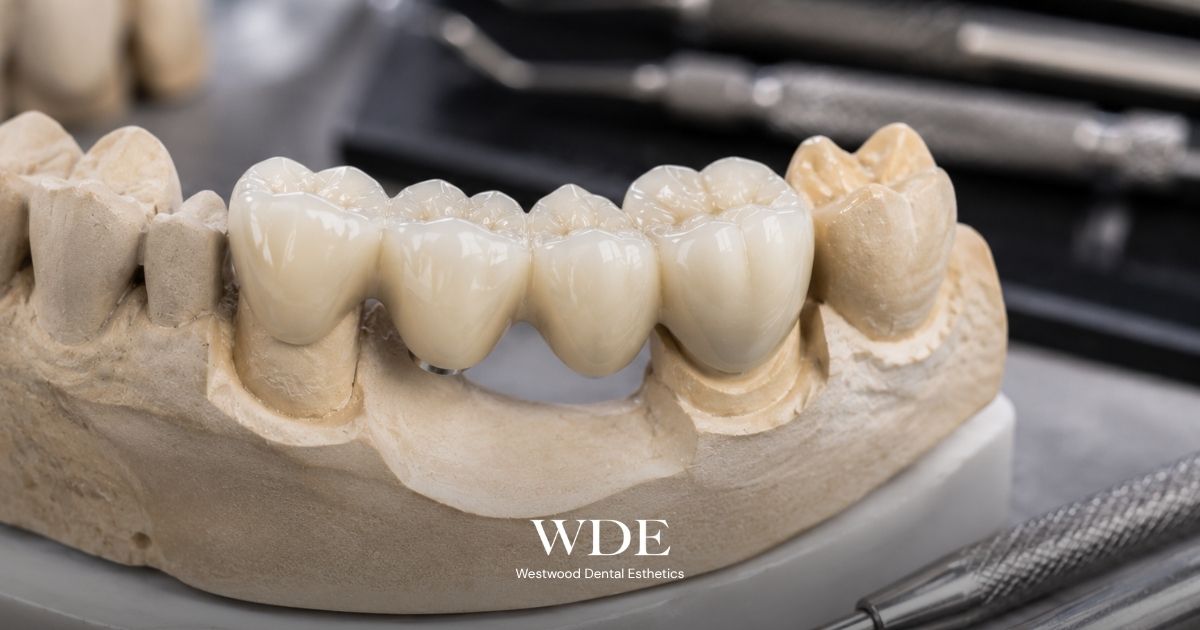
A conventional fixed dental bridge behaves differently during orthodontic treatment because it rigidly connects two or more units within a single restoration. Some patients with bridges may still be Invisalign® candidates, but the bridge can restrict independent movement of its supporting teeth and make treatment planning more complex.
The Core Mechanical Difference
A conventional fixed bridge typically includes one or more replacement teeth, called pontics, joined to retainers placed on supporting abutment teeth. Because these components form one connected restoration, the abutment teeth cannot ordinarily be repositioned independently while the bridge remains intact.
Clear aligners apply planned forces to selected teeth in carefully staged increments. A rigid bridge span limits that independent movement, so treatment feasibility depends on the bridge’s location, whether its supporting teeth need to move and what the treatment is intended to achieve.
What May Still Be Possible
Having a fixed bridge does not automatically rule out Invisalign®. In some situations, natural teeth that are not part of the bridge may still be moved while the bridge remains in place.
Whether this is appropriate depends on factors such as the location of the bridge, the desired tooth movements, the patient’s bite, and other individual clinical findings. The feasibility of treatment varies from one case to another rather than following a universal rule.
When a Bridge May Need Further Evaluation
In some situations, an existing bridge may affect overall orthodontic planning because it can restrict how certain teeth are repositioned. This does not necessarily mean the bridge must be modified or replaced.
Whether any changes are appropriate depends on the bridge’s condition, the supporting teeth, the desired movements and the broader restorative plan. Patients who are also weighing the structural differences between these restorations may find it helpful to review how a dental bridge compares with a dental implant before discussing coordinated orthodontic and restorative treatment.
These decisions are made case by case rather than according to a standard recommendation.
What about implant-supported crowns?
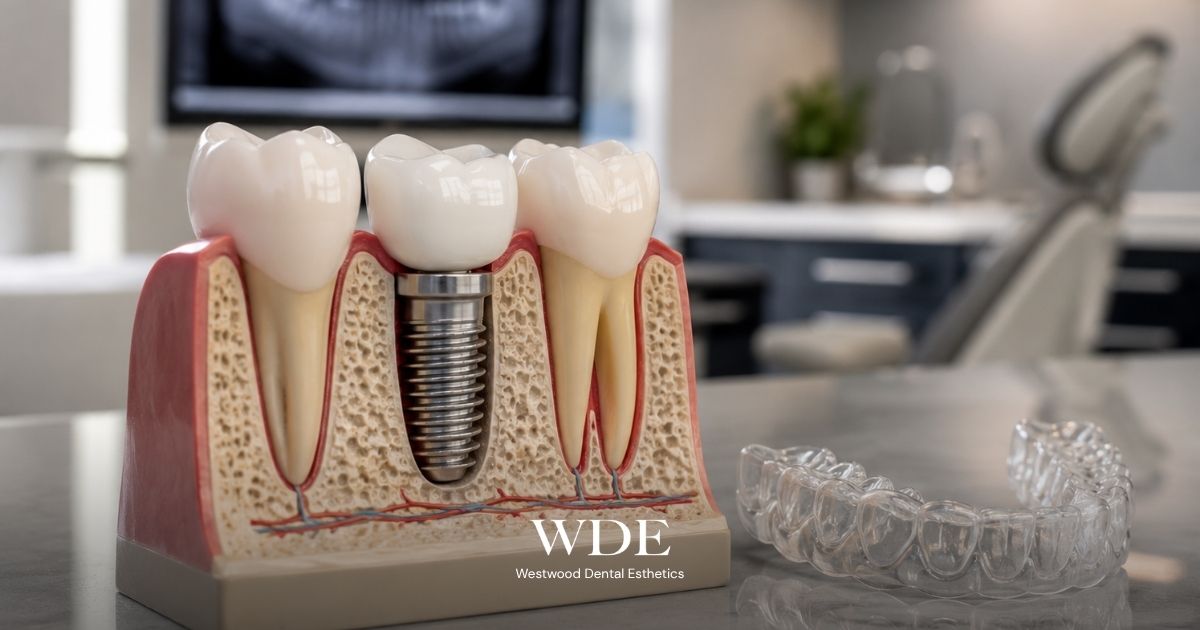
Implant-supported crowns are considered differently during orthodontic treatment because they are attached to dental implants rather than natural tooth roots. For that reason, their response to Invisalign® is not the same as that of a restoration placed on a natural tooth.
A dental implant becomes integrated with the surrounding jawbone through a process known as osseointegration. Once this occurs, the implant itself does not undergo orthodontic tooth movement. An implant-supported crown is attached to the implant, so the restoration remains connected to a structure that does not undergo orthodontic tooth movement in response to conventional orthodontic forces.
This difference is an important consideration when evaluating Invisalign® candidacy, but it does not automatically prevent treatment. Depending on the individual clinical situation, orthodontic planning may focus on the movement of selected natural teeth while the implant-supported restoration remains in its existing position. Whether this approach is appropriate depends on the desired tooth movements and other relevant clinical findings.
If a bridge limits Invisalign® options, what are the alternatives?
If the desired tooth movement cannot reasonably be achieved because of a fixed dental bridge, additional orthodontic options may be considered. The key issue is not simply whether Invisalign® is being used, but how the bridge affects the movement needed to achieve the planned result.
Depending on the case, treatment may involve leaving the bridge in place as a fixed element while moving other natural teeth, modifying the orthodontic goals to respect the bridge’s limitations, or coordinating orthodontic and restorative care. In selected cases, the bridge may need to be altered or replaced after the required tooth movement, but this is not a routine requirement.
Traditional braces are not automatically the solution because they face the same fundamental limitation when teeth are rigidly connected by a bridge. They may, however, provide different force-control options in certain complex cases. The appropriate approach can only be determined after evaluating the bridge, its supporting teeth, the bite and the intended movements.
How Dr. Kiai Assesses Invisalign® Candidacy for West LA Patients
An article can explain general principles, but it cannot determine whether Invisalign® is appropriate for a particular person. Treatment recommendations are based on an individualized clinical assessment because the same type of restoration may affect orthodontic treatment differently from one patient to another.
When considering Invisalign® for someone with existing dental work, multiple factors are evaluated together rather than relying on a single finding. These may include the condition of the teeth, the presence and condition of existing restorations, bite relationships, the desired tooth movements, and other relevant clinical findings. Considering these factors together helps determine whether Invisalign® may be appropriate and what restorative considerations may influence treatment planning.
Dr. Kaivan Kiai, DDS, and the team at Westwood Dental Esthetics help patients understand how existing dental restorations may relate to Invisalign® candidacy and discuss treatment options based on individual clinical findings.
If you have crowns, bridges, implants or other existing dental work, schedule an Invisalign® consultation with Dr. Kaivan Kiai, DDS, at Westwood Dental Esthetics, located at 1964 Westwood Blvd. Suite 250, Los Angeles, CA 90025. Patients who prefer to begin from home can also request a complimentary virtual smile evaluation before arranging an in-person visit.