

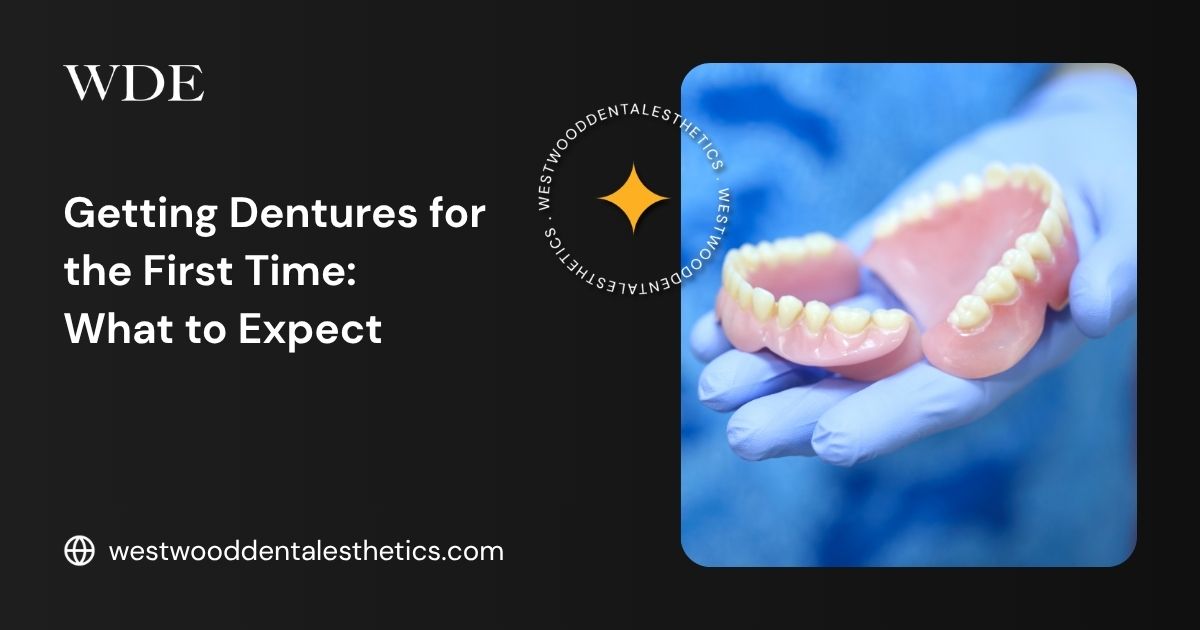
Most experiences that feel strange during the first days and weeks with new dentures—such as mild tenderness, increased saliva, a feeling of fullness and temporary speech changes—are common parts of the adjustment process. New dentures may feel awkward at first, but comfort and confidence often improve over the following weeks as the tongue, cheeks and gums adapt.
The more useful question is not whether dentures will ever feel normal, but what the path toward greater comfort typically looks like from the first day onward. Dr. Kaivan Kiai, DDS, and the team at Westwood Dental Esthetics help patients in Westwood and West Los Angeles understand what to expect, which concerns are temporary and when a follow-up adjustment may be needed.
Here is the Quick Answer:
Most first-time denture wearers experience temporary changes such as mild soreness, increased saliva, and speech adjustments as the mouth adapts to a new appliance.
Comfort and confidence often improve gradually over the following weeks, while persistent sore spots, worsening pain, or ongoing instability may warrant professional evaluation.
The First 24–48 Hours: What to Expect Right After Your Fitting
During the first day or two with new dentures, increased saliva production, a feeling of fullness, and mild gum tenderness are common experiences. These responses are a common part of early adaptation and do not necessarily mean that something is wrong.
The mouth is highly sensitive to change. When dentures are introduced, the tongue, cheeks, and surrounding tissues begin adapting to their presence, and the salivary glands may temporarily respond by producing more moisture than usual. Muscle coordination also starts adjusting to a different oral environment during this early period.
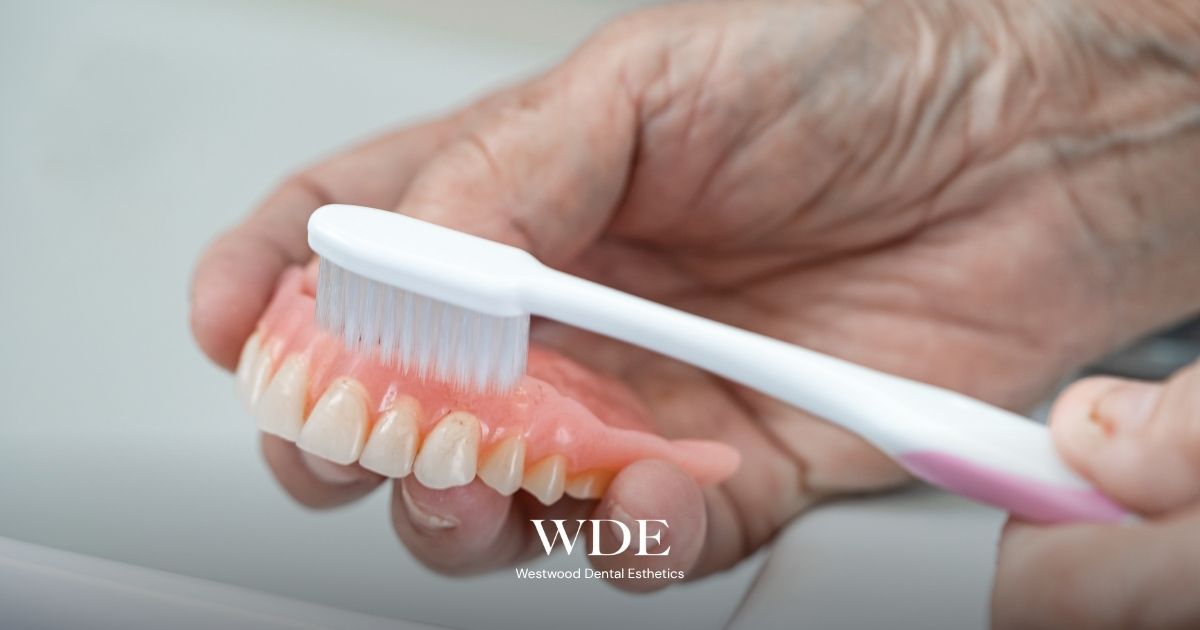
Following the wearing schedule recommended by the dental team can support a smoother transition. Gentle cleaning practices are equally important, helping keep the appliance and oral tissues comfortable while new routines are established.
It is also helpful to avoid very hot foods and particularly hard or difficult-to-chew items during the earliest stage of adaptation. Allowing the gums and surrounding tissues time to adapt can help make this initial transition feel more comfortable and predictable.
Week One to Two: The Adjustment Curve
The first one to two weeks are often a period of adjustment as everyday routines begin to feel more familiar. Small changes in comfort and coordination may occur gradually rather than all at once.
Confidence typically develops through repetition and familiarity. Small improvements in speaking, eating, and general coordination tend to build gradually, allowing many people to settle into new routines at their own pace.
Speaking and Pronunciation
Temporary changes in pronunciation, including a slight lisp or difficulty with certain sounds, are common during the early adjustment period. The tongue and cheeks are adapting to a new shape within the mouth and may need time to coordinate familiar movements differently.
Reading aloud can be a simple, low-effort way to practice everyday speech patterns. Hearing words spoken at a comfortable pace often helps people become more aware of sounds that feel unfamiliar and gradually regain confidence in conversation.
Eating and Chewing

Many people find it helpful to begin with softer foods that are cut into smaller pieces during the early weeks. Familiar textures and smaller portions may help people feel more comfortable while they adjust to new eating patterns.
As comfort improves, firmer foods may be reintroduced gradually. Chewing on both sides of the mouth more evenly can contribute to a greater sense of balance and stability during routine eating activities.
Saliva and “Looseness” Sensations
For some individuals, increased saliva production continues beyond the first few days. The mouth is still responding to the presence of a new appliance, and these changes often become less noticeable as the tissues and muscles adapt.
A feeling that the dentures move slightly during normal activities is also a common early experience. Greater familiarity, improved muscle coordination, and regular use often contribute to a greater sense of comfort and stability over time.

Normal Adjustment vs. a Real Problem: When to Call Your Dentist
Adapting to dentures often includes periods of awkwardness and mild discomfort, especially during the early stages. Not every uncomfortable experience with new dentures signals a problem that requires immediate attention. Many early changes improve as the mouth and surrounding tissues adapt to a new appliance.
Looking at patterns over time is usually more helpful than focusing on a single experience. Symptoms that gradually settle are often part of normal adaptation, while concerns that persist or intensify deserve professional attention.
| Common During Adjustment | Worth Discussing With Your Dentist |
| Mild Gum Tenderness That Gradually Improves | Sore Spots That Persist or Worsen |
| Temporary Speech Changes | Sharp or Localized Pain |
| A Sense That the Dentures Feel Loose at First but Gradually Become More Stable | Dentures That Consistently Slip During Routine Use |
| Minor Irritation That Settles With Time | Visible Sores or Irritation That Continue to Develop |
Worsening pain or a sore spot that persists should not simply be “pushed through.” These symptoms may indicate a pressure point that needs a minor professional adjustment. Contact the dental office if pain becomes sharp, irritation continues to worsen, visible sores develop or the denture repeatedly slips during ordinary use.
The First Month and Beyond: Settling In
Many patients notice meaningful improvement in speaking, eating and general comfort within the first few weeks, although the exact adjustment period varies. By the end of the first month, daily routines may feel more familiar, but occasional fine-tuning or follow-up adjustments can still be appropriate.
Continued improvement may occur as the tongue and cheek muscles become more accustomed to stabilizing the dentures. Persistent pain, repeated slipping or difficulty functioning normally should be evaluated rather than attributed indefinitely to the adjustment period.
Some patients may use denture adhesive for additional retention, while others may not need it. Adhesive should be used only as directed and should not be relied on to compensate for dentures that remain persistently loose or uncomfortable. Dr. Kiai can advise whether an adhesive is appropriate and whether the fit itself should be reassessed.
Natural changes in the gums and underlying bone can continue over time, even after dentures have been placed. Because of these changes, adjustments or relining may eventually become appropriate. This is a normal maintenance reality rather than evidence that the original treatment was unsuccessful.
How Dr. Kiai Supports Westwood Patients Through the Denture Transition
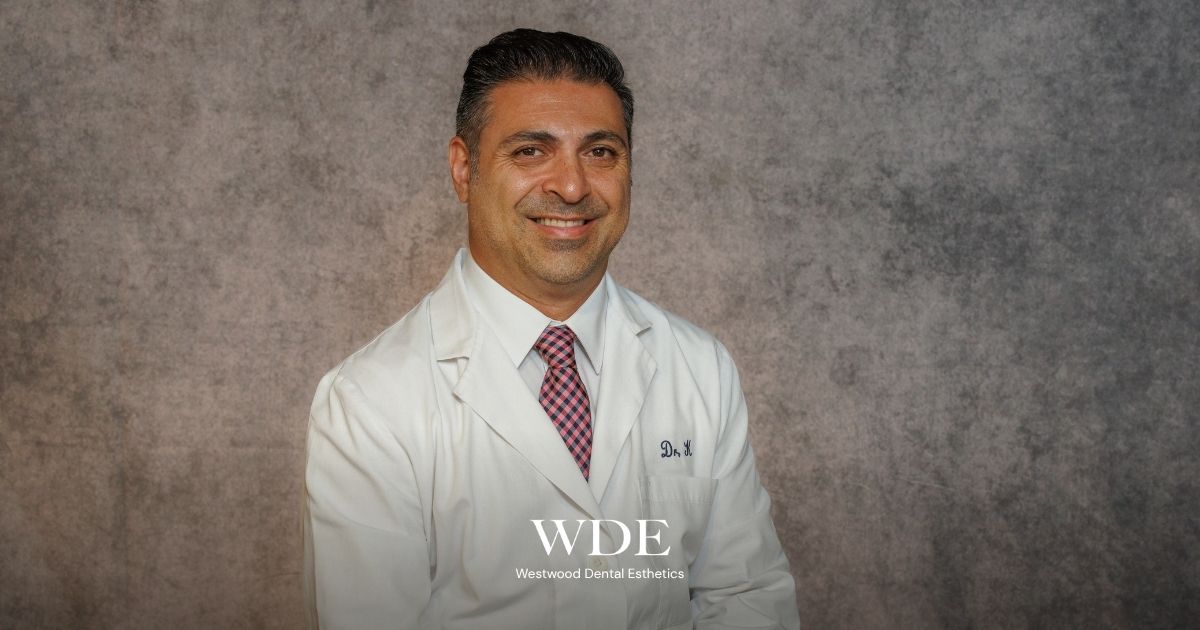
Dr. Kaivan Kiai, DDS, and the team at Westwood Dental Esthetics support patients through denture fitting, early adaptation and follow-up care. After the dentures are placed, patients are encouraged to report pressure areas, persistent looseness, changes in function or other concerns that may require evaluation and adjustment.
Follow-up care can help determine whether a symptom reflects normal adaptation or whether the denture requires minor refinement. The goal is not to ask patients to tolerate worsening discomfort, but to support a fit that becomes more manageable as the mouth adjusts.
Not every person requires full-arch replacement. For some individuals who still have some natural teeth, partial dentures may provide an appropriate tooth-replacement option.
Patients in Westwood and West Los Angeles can schedule a denture consultation or adjustment follow-up at Westwood Dental Esthetics, located at 1964 Westwood Blvd. Suite 250, Los Angeles, CA 90025. The visit provides an opportunity to review fit, comfort and function and discuss whether full or partial dentures may be appropriate.