
Why Choose Westwood Dental Esthetics for Dental Implants?
Implant care involves more than replacing a missing tooth. WDE combines individualized evaluation, coordinated treatment planning, restorative considerations, and ongoing dental care within a patient-focused approach.
Coordinated Implant Planning and Restorative Care
We evaluate implant treatment and help coordinate care based on the individual treatment plan. Implant-supported restorations are incorporated into broader restorative planning so surgical and restorative considerations can be addressed together.
Individualized Evaluation and Diagnostic Planning
Evaluation considers oral health, bone support, gum condition, bite, spacing, medical history, and treatment goals. Dr. Kaivan Kiai earned his DDS from the Herman Ostrow School of Dentistry of USC.
Restorations Planned Around Your Bite and Smile
We plan the visible implant restoration around function, bite, spacing, nearby teeth, and appearance. This restorative focus helps guide tooth-replacement planning and also informs our restorative dentistry in Westwood.
Clear Treatment and Cost Discussions
We discuss proposed treatment and associated costs, provide treatment estimates, and help patients understand relevant insurance information. Our practice works with most major PPO insurance plans and offers financing and payment options.
A Westwood Location for Ongoing Dental Care
Our practice is located at 1964 Westwood Blvd. Suite 250 in Los Angeles for implant evaluation, restorative planning, follow-up, and ongoing dental care. You can contact our Westwood office with scheduling questions.
What Is a Dental Implant?
Implant-supported tooth replacement combines structural support with a visible restoration.
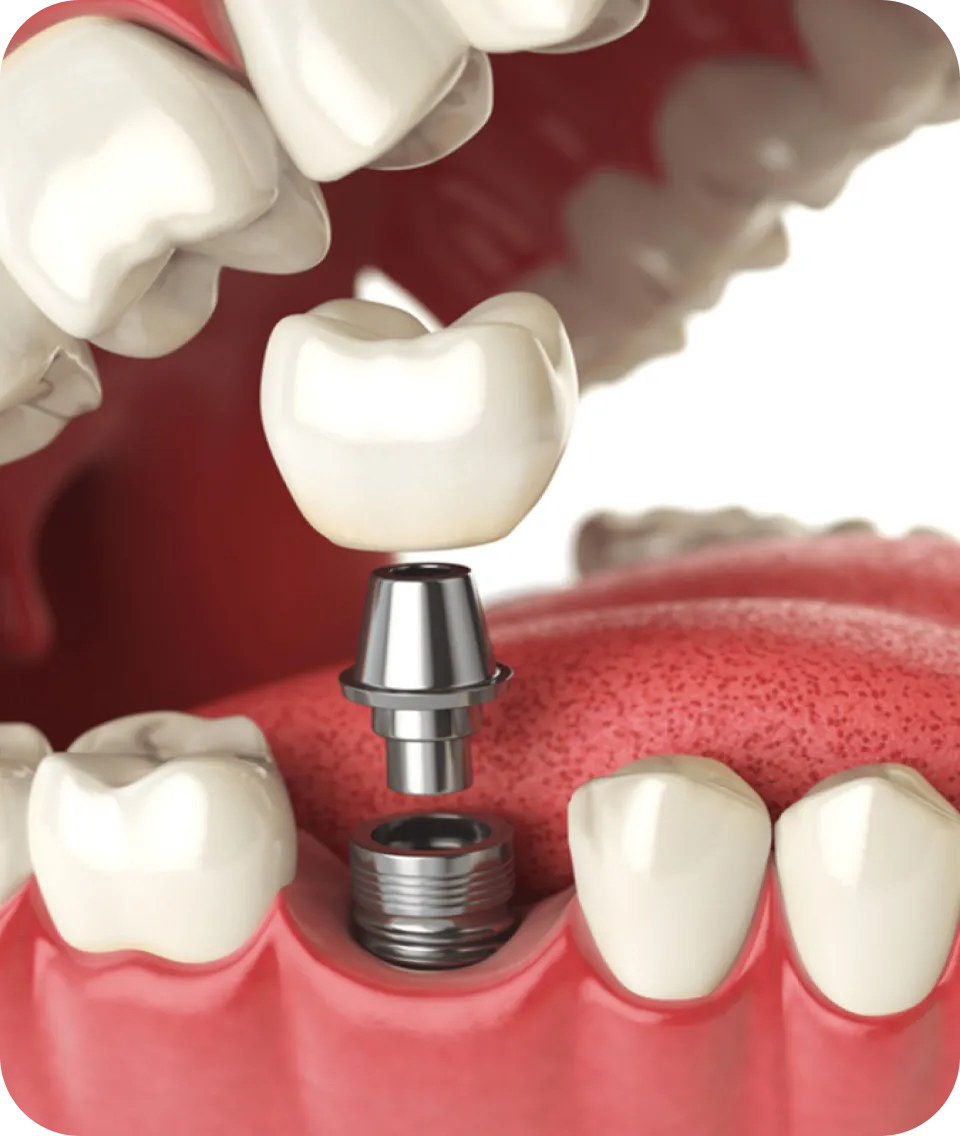
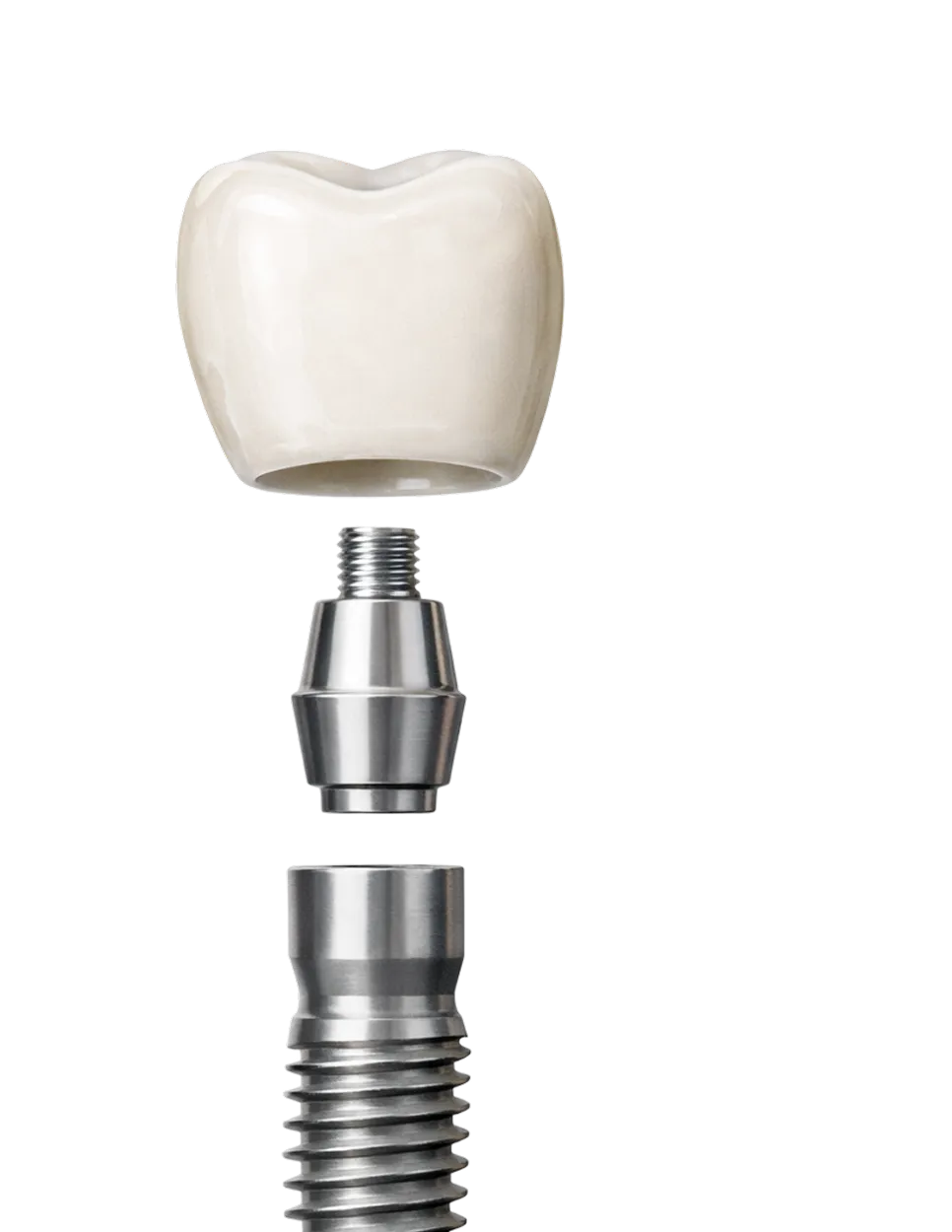
Implant Fixture, Abutment, and Restoration
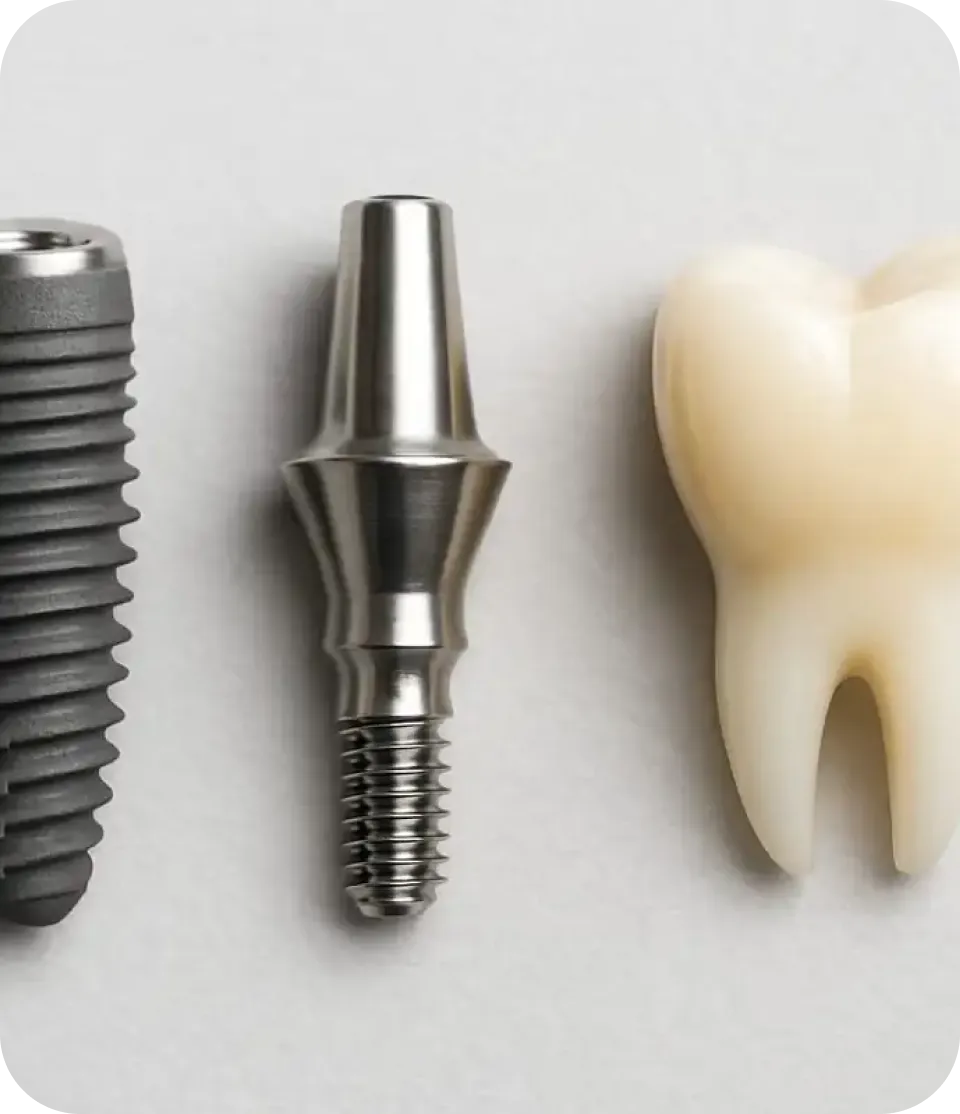
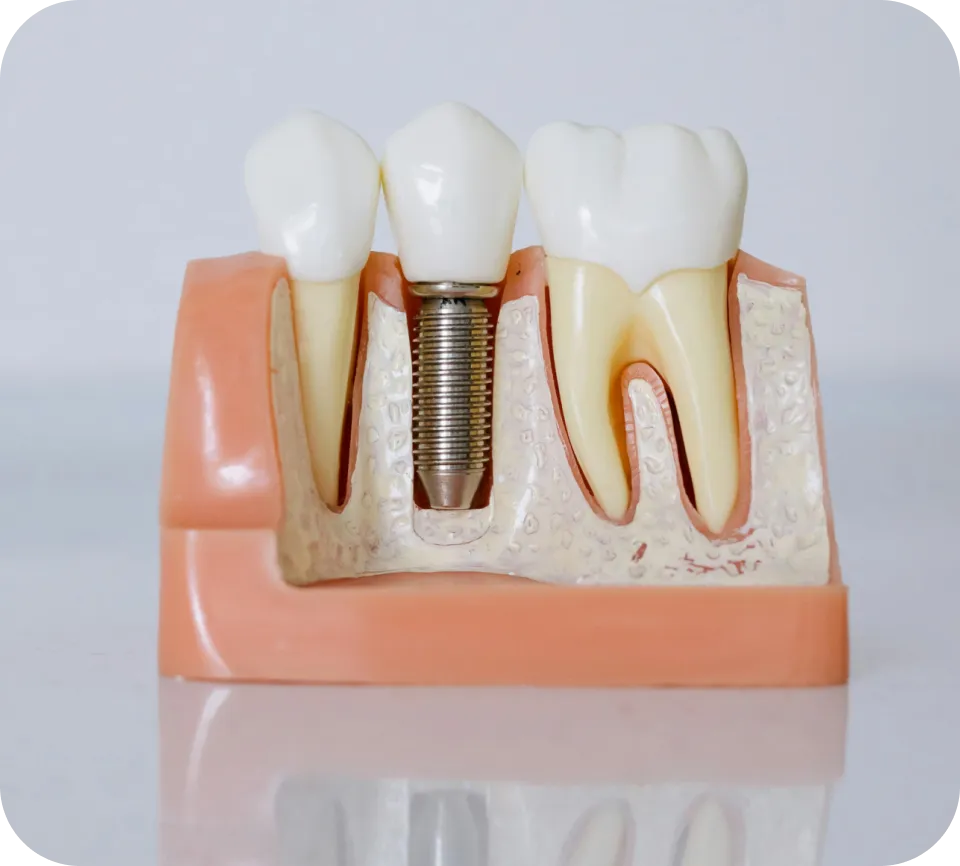
An implant fixture is placed in bone, while an abutment can connect the fixture to the visible prosthetic restoration when that design uses one. Patients can explore dental crowns in Westwood for information about crown restorations.
How Osseointegration Supports Implant Stability
Osseointegration is the biological process through which a stable interface develops between an implant fixture and surrounding living bone. This integration supports implant stability after placement and healing, although the process and healing response vary among individual patients.
Implants and Bone Support After Tooth Loss
Bone in an area of tooth loss undergoes remodeling over time. Functional loading through an implant can help support bone maintenance around the implant site, but implant treatment does not prevent all post-extraction or long-term changes in the ridge.
Everyday Function With an Implant-Supported Restoration
Implant-supported restorations are designed to replace missing-tooth function and provide stable support for chewing, with bite, spacing, nearby teeth, and appearance considered during restorative planning. Patients considering removable tooth-replacement approaches can also explore dentures in Westwood.
What Happens If You Don't Replace a Missing Tooth?
A missing tooth can affect more than appearance, influencing surrounding oral structures and function over time.
Bone Remodeling After Tooth Loss
After tooth loss, the alveolar bone in that area undergoes remodeling as local loading changes. If separate gum or periodontal concerns are also present, patients in Westwood can learn more about periodontal disease treatment and when further evaluation may be appropriate.
Neighboring Teeth Can Shift Over Time
Teeth next to a gap may tilt, drift, or change position over time, depending on the location of the missing tooth and the existing bite. Opposing teeth can also change position in some cases.
Changes in Bite and Chewing Function
Tooth loss can change how chewing forces are distributed and may reduce chewing efficiency, especially when multiple or functionally important teeth are missing. The effect depends on the gap’s location and the overall bite.
Oral Support Can Change With More Extensive Tooth Loss
With more extensive tooth loss, changes in the supporting ridge can affect the lips, cheeks, denture-bearing tissues, or lower facial appearance in some patients. The degree of change depends on the extent and location of tooth loss.
Remaining Teeth May Carry More Functional Load
When teeth are missing, the remaining teeth may carry more chewing load or play a greater role in the bite. Ongoing evaluation through general dentistry can help monitor these changes over time.
Are You a Candidate for Dental Implants?
Dental implant candidacy depends on oral health, anatomy, healing factors, and overall health considered together.
General Health and Healing Considerations
Medical history, medications, healing capacity, and relevant health conditions all inform whether implant treatment is appropriate.
Gum Health and Active Periodontal Disease
Healthy periodontal tissues support implant planning, while active gum disease should be evaluated and appropriately managed as part of treatment planning.
Bone Support and Implant Planning
When local bone support is limited, additional site preparation may be considered depending on the clinical findings. Learn more about bone grafting in Westwood and when it may be relevant to treatment planning.
Smoking, Diabetes, and Other Risk Factors
Smoking and diabetes control can influence healing and implant-related risk, so both are considered during individualized treatment assessment.
Age and Dental Implant Candidacy
Chronological age alone does not determine candidacy; overall health, oral conditions, anatomy, healing considerations, and treatment goals also matter.
If You Were Previously Told You Are Not a Candidate
A current individualized evaluation can clarify whether changed conditions, site factors, or restorative needs affect the available treatment options.
Types of Dental Implant Treatment in Westwood
Implant treatment varies with the number of teeth being replaced.
Single-Tooth Implant Treatment
For one missing tooth, an implant fixture can support an individual restoration at the missing-tooth site. Planning considers available bone, spacing, bite relationships, and the condition and position of adjacent teeth.
Multiple Teeth and Implant-Supported Bridges
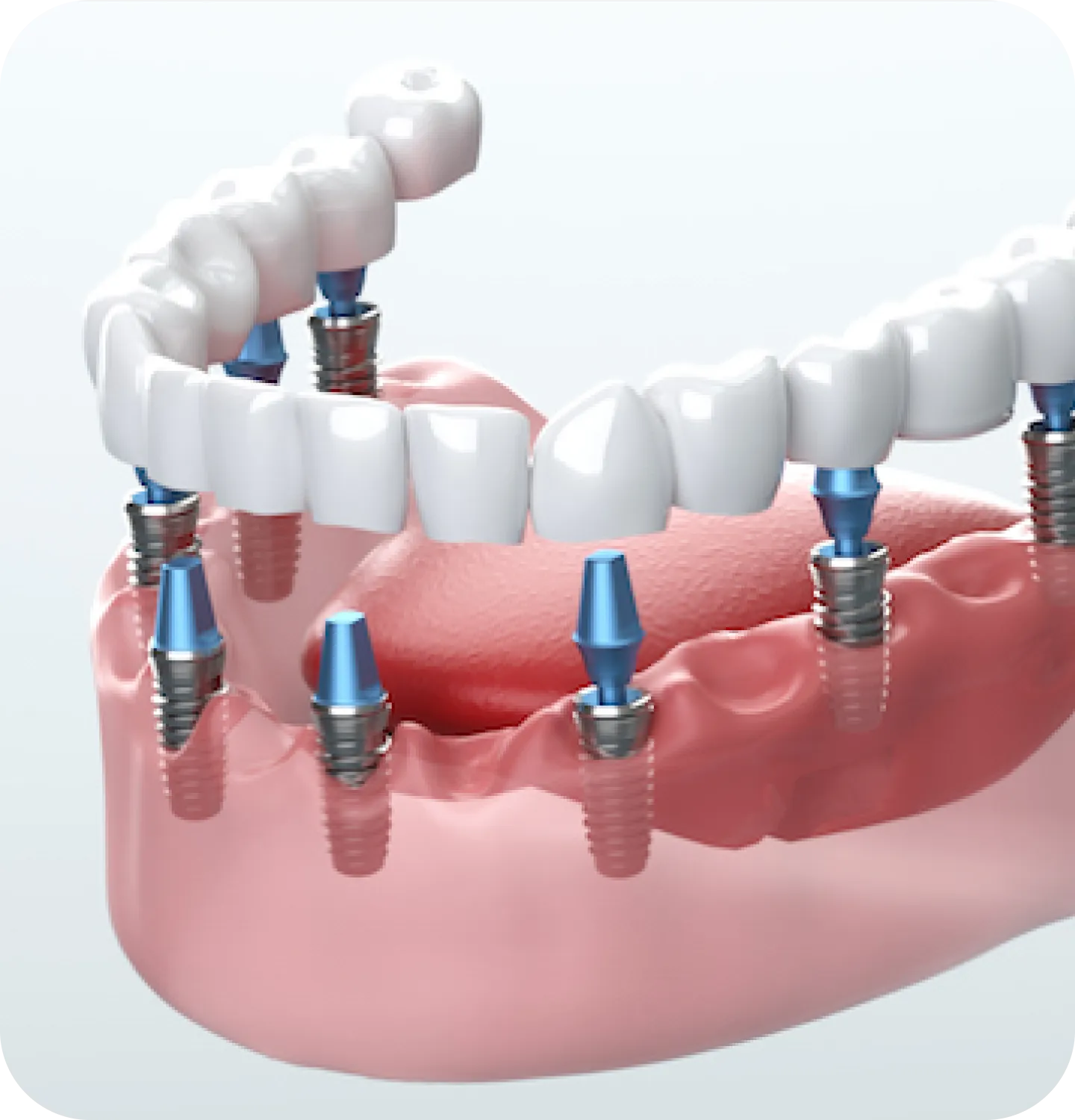
For several missing teeth, an implant-supported bridge can use implants as prosthetic support without requiring one fixture for every missing tooth. The number, location, and distribution of implants depend on the restorative plan.
Full-Arch and All-on-4 Treatment Concepts
Full-arch implant treatment addresses extensive or complete tooth loss in an arch, while All-on-4 is one specific full-arch treatment concept. Planning varies with anatomy, restorative needs, and related surgical considerations. For more information about procedures that may be relevant to this stage of care, see oral surgery in Westwood.
Implant-Supported Denture Treatment
Implant-supported denture treatment uses implants to provide support or retention for certain denture-based designs. The appropriate configuration depends on anatomy, restorative goals, available support, and the specific prosthetic design being planned.
Implant Planning Alongside Existing Dental Work
Implant planning can account for existing teeth and restorations, including their condition, position, bite relationships, and spacing. Existing dental work can influence treatment sequencing, restorative design, and whether changes are needed elsewhere in the plan.
Dental Implants vs. Bridges, Dentures, and Doing Nothing
Different tooth-replacement approaches involve different clinical, functional, and practical trade-offs.
Dental Implants vs. a Traditional Dental Bridge
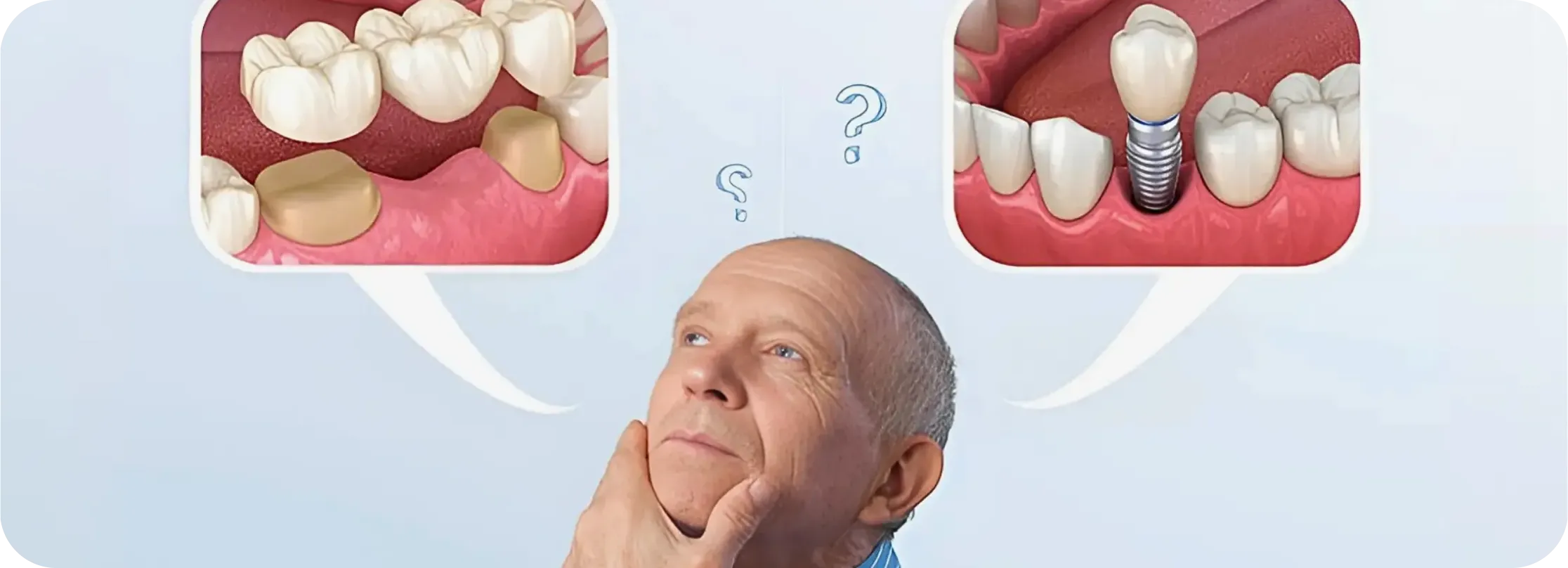
An implant-supported restoration relies primarily on an implant fixture, while a traditional bridge commonly uses neighboring teeth for support. The condition of those teeth, available bone, anatomy, and surgical preferences can influence planning.
Dental Implants vs. Removable Dentures and Partials
Conventional removable dentures and partials replace missing teeth without implant placement, while implant-supported treatment uses implants for support. Stability, anatomy, restorative design, treatment burden, maintenance needs, and patient preferences all influence which approach fits.
Comparing Longevity, Bone Health, and Cost
Longevity, local bone response, maintenance, and cost vary by treatment and individual circumstances. Implant fixtures and restorations also have different maintenance and replacement needs, so these factors should be considered separately rather than ranked universally.
Comparison Table
| Factor | Dental Implant Treatment | Traditional Dental Bridge | Removable Denture or Partial | Leaving the Space Unreplaced |
|---|---|---|---|---|
| Support | Uses an implant fixture for support. | Commonly relies on neighboring teeth. | Uses removable prosthetic support. | No replacement support is added. |
| Bone at the Missing-Tooth Site | Implant loading can help support local bone maintenance. | Does not provide implant loading at the site. | Ridge changes can continue over time. | Bone remodeling can occur after tooth loss. |
| Adjacent Teeth | Usually does not rely on adjacent teeth for primary support. | Supporting teeth commonly require preparation. | May contact or rely partly on remaining teeth and tissues. | Adjacent or opposing teeth may shift over time. |
| Daily Care | Requires hygiene around the implant and restoration. | Requires cleaning around and beneath the bridge. | Requires prosthesis cleaning and routine oral care. | Remaining teeth and tissues still require routine care. |
| Treatment Process | Includes surgical and restorative stages. | Primarily restorative treatment involving supporting teeth. | Prosthetic treatment varies with design and oral condition. | No replacement procedure is performed initially. |
| Cost Structure | Depends on implant, restoration, diagnostics, and site preparation when needed. | Depends on bridge design and supporting teeth. | Depends on prosthesis design and extent of tooth replacement. | No initial replacement cost, but future needs may change. |
When a Bridge or Denture May Be the Better Choice
Implant treatment is not appropriate for every patient. A bridge or denture may better fit the clinical situation when anatomy, oral health, surgical preferences, treatment burden, remaining teeth, restorative needs, or patient priorities favor another approach.
The Dental Implant Process at Westwood Dental Esthetics
Implant treatment progresses through planned stages tailored to each individual case.
How long does the dental implant process take? The total treatment time varies because site preparation, healing, implant integration, restorative needs, and whether stages can be combined all affect the overall sequence.
Evaluation and Diagnostic Records
Evaluation considers oral health, bone support, gum condition, bite, spacing, medical history, and treatment goals. Digital imaging or other diagnostic records may be used.
Treatment Planning and Sequencing
Evaluation findings guide the restorative approach, determine whether site preparation is needed, and shape treatment sequencing and care coordination for the individual plan.
Site Preparation When Needed
Some treatment plans involve extraction or other site preparation before implant placement. Patients needing tooth removal can explore tooth extractions in Westwood.
Implant Placement
The implant fixture is surgically placed at the planned site according to the treatment plan, creating the foundation for the later restorative phase.
Healing and Osseointegration
After implant placement, healing allows a stable interface to develop between the fixture and surrounding bone before the restorative phase can proceed.
Restorative Component Planning
Once the implant is ready for restoration, the necessary restorative components and records are planned according to the prosthetic design and individual treatment needs.
Final Implant Restoration
The final implant-supported restoration is placed or delivered after restorative planning, with fit, bite, spacing, function, and appearance evaluated as part of treatment.
Follow-Up and Ongoing Monitoring
Follow-up includes monitoring the implant-supported restoration and surrounding tissues, along with ongoing hygiene and professional dental care appropriate to the individual treatment plan.
Bone Grafting and Site Preparation for Dental Implants
Not every dental implant requires bone grafting. When additional site preparation is needed, it becomes part of the individual implant plan.
Why Bone Grafting May Be Considered Before an Implant
If an implant site does not have enough bone support for the planned implant, grafting may be considered to prepare the area. The need depends on the site, anatomy, and restorative plan.
Bone Grafting Approaches in Implant Dentistry
Bone grafting is not a single approach. The type and extent of site preparation depend on where support is needed, the condition of the area, and the planned implant restoration.
When Sinus Augmentation May Be Considered
For implants replacing upper back teeth, the amount of bone below the maxillary sinus can affect planning. In some cases, sinus augmentation may be considered to create additional support for implant placement.
Ridge Preservation After Tooth Extraction
When a tooth is removed and future implant treatment is being considered, ridge-preservation grafting may sometimes be planned at the extraction site to help maintain dimensions for later restorative treatment.
How Site Preparation Can Affect Implant Timing
When grafting or other site preparation is needed, additional healing can affect when implant placement or restorative treatment occurs. The overall timing depends on the procedure, site, healing response, and treatment plan.
Recovery and Aftercare Following Implant Surgery
Recovery after implant surgery varies with the procedure and individual healing.
What to Expect During Early Recovery
Temporary soreness, tenderness, swelling, or minor bleeding can occur after implant placement, with the experience varying between individuals.
Managing Discomfort and Swelling
Follow your postoperative instructions for managing discomfort and swelling, and contact the treating dental team if symptoms worsen unexpectedly.
Eating and Drinking During Healing
Food choices may need temporary adjustment during healing to protect the surgical area; follow the dietary guidance provided for your procedure.
Activity, Work, and Return to Routine
Return to work and normal activity depends on the procedure, recovery, physical demands, and the clinician’s individualized postoperative guidance.
Warning Signs That Warrant a Call to the Office
Contact the dental office for worsening pain, increasing swelling, persistent bleeding, fever, or other unexpected postoperative concerns.
Seek urgent medical care for difficulty breathing or swallowing, rapidly spreading facial or neck swelling, or uncontrolled serious bleeding.
How Long Do Dental Implants Last, and How Do You Care for Them?
Implant longevity varies, and the fixture and visible restoration have different maintenance and replacement considerations.
Implant Lifespan and What Influences It
Dental implants do not have one fixed lifespan. In a systematic review of single implants followed for at least 10 years, implant-level survival was 95.0%, while 89.5% of the original single crowns remained in function.1 Long-term outcomes vary with tissue health, oral hygiene, mechanical loading, restoration design, and ongoing care.
Daily Cleaning Around an Implant
Regular brushing and cleaning around implant-supported restorations help control plaque and support the health of surrounding tissues.
Peri-Implant Disease and Ongoing Maintenance
Peri-implant mucositis affects soft tissues, while peri-implantitis also involves supporting bone loss, making ongoing plaque control and monitoring important.
Night Guards and Protecting Implant Restorations from Grinding
Grinding or clenching can affect implant-supported restorations. When appropriate, patients can explore custom mouth guards in Westwood.
Professional Cleanings and Ongoing Monitoring
Professional follow-up helps monitor the implant restoration, surrounding tissues, hygiene, and mechanical condition based on individual clinical needs.
When an Implant Crown or Restoration May Need Replacement
A crown or other restoration may eventually need adjustment, repair, or replacement without necessarily meaning the implant fixture has failed.
Implants as Part of a Complete Smile Plan
Implant treatment can be planned around existing teeth, spacing, bite relationships, restorative needs, and broader aesthetic goals.
Matching Your Implant Restoration to Nearby Teeth
The visible implant-supported restoration can be planned around nearby teeth, available space, shape, shade, and bite so it works with the surrounding dental appearance and function.
Sequencing Implants with Whitening, Veneers, or Other Cosmetic Work
Restorative materials do not whiten like natural enamel, so sequencing can matter when shade matching is part of the plan. Patients may consider teeth whitening in Westwood before final shade selection, while veneers in Westwood or broader cosmetic dentistry in Westwood may address other aesthetic goals.
Coordinating Implants with Bite and Alignment Concerns
Tooth position, spacing, and bite relationships can influence implant and restorative planning. Alignment concerns may need consideration before the final implant-supported restoration is planned.
Coordinating the Overall Treatment Plan
We consider the implant-supported restoration within the broader treatment plan, including relevant restorative, cosmetic, bite, and spacing needs, and help coordinate care according to the individual clinical situation.
Dental Implant Cost, Insurance, and Financing in Westwood
Dental implant costs vary with treatment components and individual clinical needs.
What Determines the Cost of Dental Implant Treatment
Costs can reflect diagnostic needs, the implant fixture, restorative components, treatment complexity, and additional procedures such as extraction or site preparation when clinically necessary.
Single Implant, Multiple Implants, and Full-Arch Cost Structure
Cost structure changes with the number of teeth replaced, required implant support, restoration type, treatment extent, and complexity of the planned prosthetic treatment.
How PPO Insurance May Apply to Dental Implants
Westwood Dental Esthetics works with most major PPO insurance plans, but coverage depends on individual benefits, coverage terms, and the specific implant treatment proposed.
Financing and Available Payment Options
Patients can discuss proposed implant treatment costs, financing, and available payment options with our practice once the relevant treatment needs have been identified.
Considering Long-Term Treatment and Maintenance Costs
Financial planning can also consider future maintenance, adjustments, and possible repair or replacement of prosthetic components rather than focusing only on initial treatment costs.
Getting a Personalized Dental Implant Cost Estimate
A meaningful estimate reflects the proposed implant restoration, diagnostic needs, site preparation when needed, and other treatment components. Insurance and payment information can also be reviewed.
Risks, Complications, and Realistic Expectations
Dental implant treatment involves potential risks, and individual outcomes can vary.
Possible Complications of Implant Surgery
Possible complications include infection, healing problems, bone or tissue complications, and injury to nearby structures.
What Happens If an Implant Fails
An implant that loses stable integration requires evaluation and may need additional treatment.
Factors That Affect Implant Outcomes
Healing, tissue health, medical factors, oral hygiene, and mechanical loading can influence outcomes.
Setting Realistic Expectations for Appearance and Function
Implant-supported restorations are planned for function and appearance, but individual results can vary.
Book Your Dental Implant Consultation in Westwood
Schedule a dental implant consultation to discuss your missing-tooth or tooth-replacement needs, review relevant treatment considerations, ask questions, and understand possible next steps based on your individual dental needs.
Westwood Dental Esthetics
- 1964 Westwood Blvd. Suite 250 Los Angeles, CA 90025
- Phone: (310) 475-1667
- Hours: Mon–Fri 8:00 am–5:00 pm | Sat–Sun Closed
Results vary based on each patient’s oral-health condition, anatomy, healing factors, treatment goals, and clinical needs. A professional assessment and appropriate diagnostic records are required to determine suitable dental implant treatment options and develop an individualized treatment plan.